The short answer
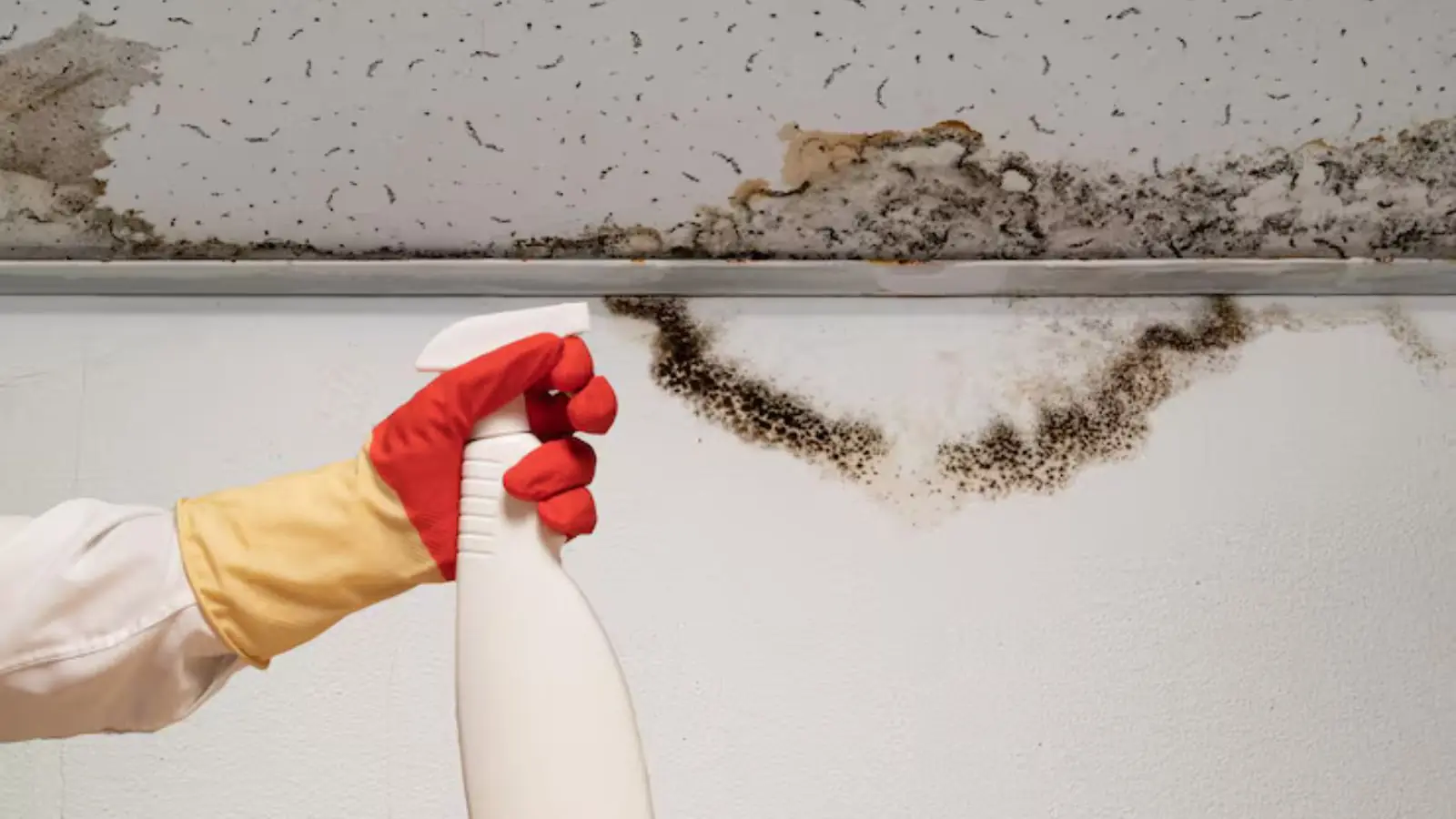
You noticed it while brushing your teeth: gray-black speckling in the corner of the bathroom ceiling, maybe a ring of yellow around it. Mold needs a damp surface to grow, so the real question is where the moisture comes from. Steam from showers is the most common source. A roof leak or an upstairs fixture is the one that does the damage.
If the spots are small, dry to the touch and sit right above the shower, a careful wipe-down and a better fan habit may be all you need. If the ceiling is stained brown, feels soft, sags, or the spots keep returning within weeks of cleaning, the water is coming from somewhere you cannot see. That is when you stop scrubbing and start looking.
Four usual suspects behind a spotted ceiling
Shower steam and a weak fan
Warm, wet air rises and condenses on the coolest surface, which is usually the ceiling. A fan that is noisy, slow or vented into the attic instead of outdoors leaves that moisture behind.
A roof or flashing leak
Water tracks along a rafter and shows up above the tub, not under the damaged shingle. Stains often darken after a rainstorm and fade in dry weeks.
An upstairs bathroom or laundry
A failed toilet seal, a tub overflow or a washer hose can drip through the ceiling below for months before anyone sees a mark.
A leaking vent duct
A disconnected or sagging exhaust duct in the attic drips condensation onto the drywall, usually in one stripe along the duct path.
Ceiling soft, stained or spreading?
Describe what you see on the phone, and we will tell you whether it sounds like steam or a leak. Same-day response when available.
Steam or leak? A ten-minute check
Look at the pattern
Speckled dots scattered across the ceiling and corners point to steam. One dark, ring-shaped stain with a darker edge points to liquid water from above.
Press gently with a gloved finger
Dry, hard drywall is a good sign. A cool, soft or crumbly patch means the gypsum has absorbed water and the ceiling is compromised.
Run the shower and watch the fan
Hold a single square of toilet paper near the fan grille. If it does not stick, the fan is moving too little air to clear a steamy bathroom.
Check the attic or the room above
If you can safely see the attic, look at the duct, the insulation above the stain and the underside of the roof deck. If a bathroom sits upstairs, look at the toilet base and tub caulk.
What you can do yourself, and what to leave alone
A small area, roughly the size of a dinner plate or less, on a dry and solid ceiling is a reasonable household cleaning task. Open the window, run the fan, wear an N95 mask, gloves and eye protection, and wipe with a damp cloth and detergent solution, then dry the surface fully. Do not sand, scrape or dry-brush it, because that puts spores into the air.
- Do wipe small, dry, firm spots with detergent and water, then dry them completely
- Do keep the fan on for 20 to 30 minutes after each shower
- Do leave the bathroom door open after showers when the weather allows
- Do not paint over a stain without first finding and fixing the moisture
- Do not mix bleach with ammonia-based cleaners, which releases toxic gas
- Do not poke a sagging or bulging ceiling directly below a bathroom or roof
Painting over mold with a stain-blocking primer hides it for a season. If the moisture is still there, the spots return through the paint, often darker.
Decision table: clean it, watch it or call
| What you see | Likely cause | What to do |
|---|---|---|
| A few dots over the shower, ceiling firm | Steam and weak ventilation | Clean, fix fan habits, recheck in two weeks |
| Spots in corners plus damp window frames | Poor air exchange | Improve ventilation, consider a fan that moves more air |
| Brown ring, darker edge, firm ceiling | Past leak from above | Find the leak first, then call about moisture mapping |
| Soft, bubbled or sagging drywall | Active or repeated leak | Keep clear of the area and call for an assessment |
| Spots return within weeks of cleaning | Hidden moisture source | Stop cleaning and have the cavity checked with a moisture meter |
| Stain larger than about 10 square feet | Beyond household cleanup | Call a mold remediation company |
The 10 square foot line is a rule of thumb commonly used in homeowner mold guidance. It is a sensible place to hand the job to someone with containment gear.
When to call, and what a visit should include
Call when the surface is soft, the stain is large, the spots keep coming back, or water is plainly entering from above. A proper visit starts with finding the water, not the mold. That means a moisture meter reading across the ceiling and the walls below it, and a thermal imaging camera to see cooler wet zones behind paint.
If the ceiling is wet, drying comes first, and that is a water damage repair job. If mold has actually established itself on the drywall, the work is mold remediation: containment with plastic sheeting, negative air, HEPA air scrubbers, removal of the affected drywall and a dry-out before anything is rebuilt. Ask whether its crews follow ANSI/IICRC S520, the published mold remediation standard, and ask to see its contractor licence.
Health questions about mold exposure belong to a physician. A restoration company can tell you what is damp and what is moldy, not what it means for your body.
Mission Viejo notes: storms, older exhaust fans and who to call
According to the National Weather Service summary for 2024, the February 4 to 8 storms hit Orange County hard, with 4 to 10 inches of rain. A bathroom ceiling stain that appears or darkens after a stretch of rain like that points at the roof, flashing or a vent penetration, not at the shower. Photograph it, note the dates, and have the roof side checked before anyone paints.
Housing data compiled by the Southern California Association of Governments from Census surveys shows about two-thirds of Mission Viejo homes were built between 1970 and 1989. Original exhaust fans from that era are often small, loud and weakly vented, so homeowners switch them off. If yours rattles and barely moves a tissue, replacing it is a cheap fix compared with ceiling repair.
If a stain traces to a supply pipe rather than the roof or the shower, the city lists four water providers in Mission Viejo: El Toro, Moulton Niguel, Santa Margarita and Trabuco Canyon. Which one serves you depends on your address, so check a recent water bill before you call.
Black mold on bathroom ceilings: common questions
Is the black stuff on my Mission Viejo bathroom ceiling always mold?
No. Dirt, soot from candles, mildew on paint and dried water stains can look similar. Color does not tell you what a growth is, so do not trust it. What matters is whether the area is damp, soft or growing, and that is what an assessment looks at.
Can I just bleach it?
Bleach can lighten a stain on a hard surface, but drywall is porous and the moisture underneath is untouched. Detergent and water with careful drying is the gentler first step for a small area. Never combine bleach with ammonia or other cleaners.
How do I know whether the fan is the problem?
Run the shower and check whether the mirror stays fogged long after you finish. A fan should clear a normal bathroom in about 20 to 30 minutes. Also look at where the duct ends, because a duct that stops in the attic dumps steam above your ceiling.
Will painting over it with mold-resistant paint fix it?
Mold-resistant paint slows growth on a dry surface. It does not stop a leak, and it hides a stain that you may need to watch. Fix the moisture first, then repaint.
Does insurance pay for a moldy bathroom ceiling?
It depends on the cause. Sudden and accidental water damage is often covered, and gradual leaks and neglect often are not. Check your policy and ask your insurer, and keep photographs and a log of every call.
Do you work near Lake Forest and Laguna Hills too?
Yes. The Mission Viejo base serves nearby towns, including Lake Forest and Laguna Hills. The same assessment applies there: find the water, dry it, then deal with the mold.