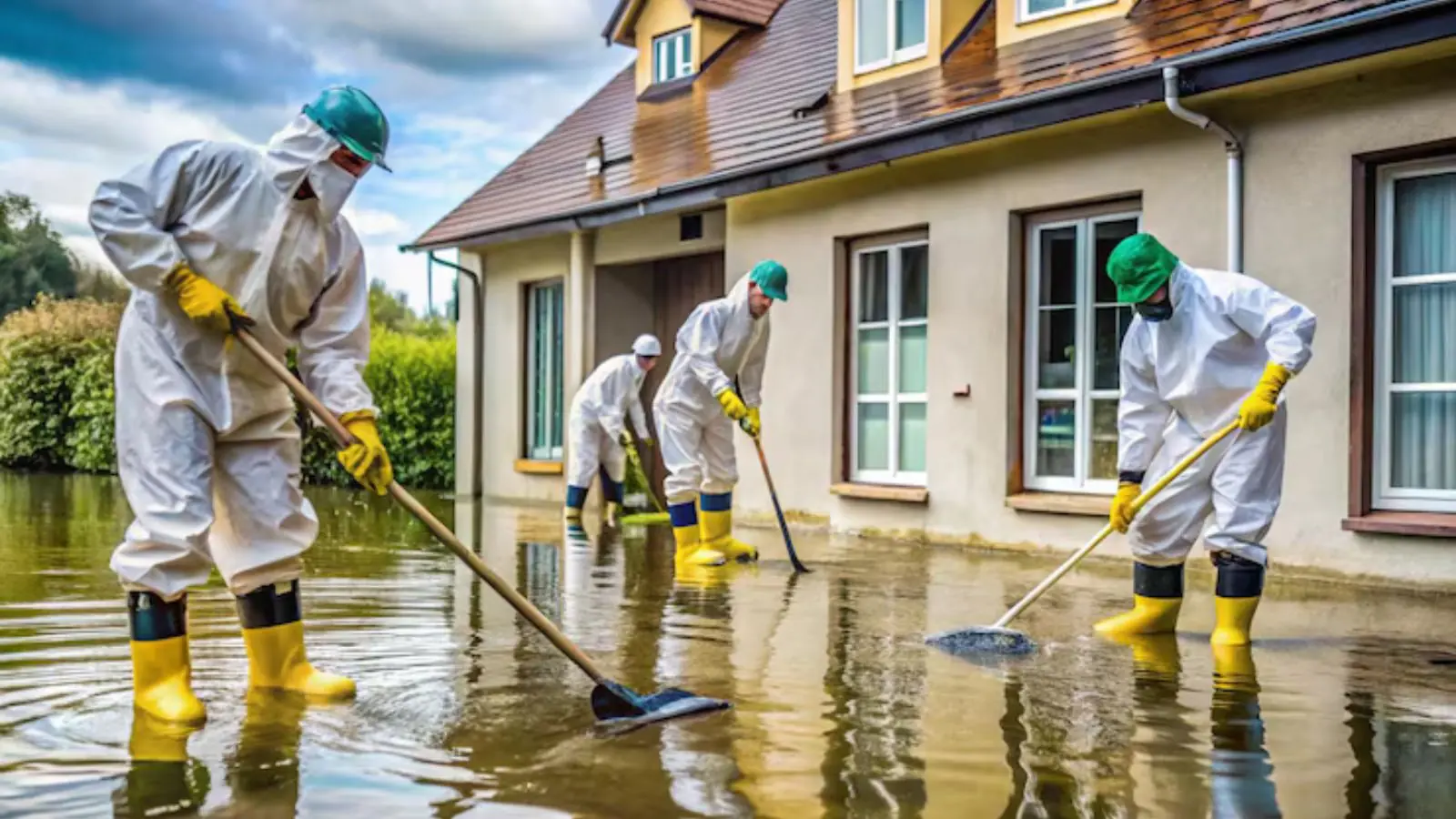
Floodwater is inside the house right now
You are looking at standing water, and every hour it sits, it moves further into walls, flooring and cabinets. Our 24/7 emergency line is open, and we offer same-day response when available. Here is what to do while you wait.
Flood damage restoration in Mission Viejo, CA is the removal of storm, creek, groundwater or sewage water from a home, followed by cleaning, disinfecting, drying and repair planning. It covers more than a wet carpet because the water is carrying soil and bacteria, which changes every decision after it.
If the water is near outlets, the panel or appliances, stay out and do not touch anything electrical. Cut power at the main breaker only if you can reach it dry. A gas smell, sparking or a buzzing panel means leave and call 911 or the utility before you call us.
- Stop any source you can safely reach, such as an open hose bib or a failed pump.
- Shut off the main water valve if a pipe is involved.
- Lift valuables, papers and electronics to a dry shelf above the water.
- Keep children, pets and anyone with cuts out of the water.
- Take photos and video of the waterline before anything is moved.
Sewage coming up through a drain or toilet? Here is what it means
Gurgling toilets, a shower drain that spits brown water, or a floor drain bubbling in the garage all point to a blocked or overloaded sewer line, not a plumbing leak. The water that comes up is Category 3, and it carries bacteria that do not belong in your home.
Stay out of the area, keep others away, and do not run water, flush or use the washer. The professional name for the cleanup is sewage backup cleanup, and it has its own section below.
The first step is the same every time. Stop using water, keep out, and call.
Water inside the house now?
Call the 24/7 emergency line. Same-day response when available.
Why storms put water in Mission Viejo homes
Rain here falls in bursts. The National Weather Service reported that storms between February 4 and 8, 2024 dropped 4 to 10 inches on Orange County, which is far more than a gutter or yard drain is built to move quickly. It also noted widespread flooding across Orange, San Diego and Riverside counties in a January 2023 storm series.
Even a lighter event can find a way in. The city said Tropical Storm Hilary in August 2023 left no major damage, though crews handled debris and gave out about 3,500 sandbags. The tie-back is simple: after a big or repeated storm, check low doorways, garage thresholds, window wells and roof valleys the same day.
The city also advises clearing gutters, downspouts and low areas of yards and patios to avoid water backing up. If water does reach the inside, emergency water removal handles the pump-out while this page covers what the water carried in.
What kind of water is it? Signs and categories
Clear rainwater from a roof or window
Often Category 1 at first, but it picks up dirt and becomes Category 2 within a day or so. Dry it fast.
Water from a washer, dishwasher or sump
Category 2, sometimes called gray water. It can cause illness if swallowed and needs cleaning, not just drying.
Water that came in from outside the house
Creek, street or ground flow is treated as Category 3 because it has touched soil and sewage. Porous materials usually have to go.
Water with a sewer smell or dark color
Treat it as Category 3 until proven otherwise. Do not walk through it or try to wipe it up.
Water that has sat more than 48 hours
Clean water can drop a category as time passes. Delay makes the job bigger.
ANSI/IICRC S500 is the published standard that sorts water into Categories 1, 2 and 3. Ask any company if its crews work to it, and how it decides what to keep and what to remove.
How a flood response runs
Make the site safe
We check for electrical, gas and structural hazards, set up protective gear, and decide where the contaminated zone starts and stops.
Pump and extract
Extraction units and pumps remove standing water. Sludge and soil are scooped and bagged, not pushed around.
Remove and clean
Wet carpet, pad, low drywall and insulation that touched Category 3 water come out. Remaining surfaces are cleaned and treated with an antimicrobial.
Dry and verify
Air movers, LGR dehumidifiers and moisture meters run until daily readings show dry. Thermal imaging cameras check for hidden pockets.
Keep, clean or throw away: what contaminated water does to materials
| Material | Category 2 water | Category 3 water |
|---|---|---|
| Carpet and pad | Pad usually goes, carpet may be cleaned | Both usually removed |
| Drywall | Cut out if wet more than briefly | Cut out above the waterline |
| Hardwood flooring | Dry and assess, may be saved | Often removed, depends on exposure time |
| Tile and sealed concrete | Clean and treat in place | Clean and treat in place |
| Upholstery and mattresses | Case by case | Usually discarded |
| Solid wood furniture | Clean and dry | Clean and treat, finish may be lost |
Throwing things away is the hardest part of flood response. We explain the reason for each item and photograph it first, so you have a record for your claim.
Basement Flooding Cleanup
This section applies to any lower level, whether that is a basement, a below-grade garage, a sunken family room or a ground-floor bedroom that sits lower than the yard. Water enters from the outside edge, from the floor, or from drains that cannot keep up, and then it pools at the lowest point.
Never go into standing water in a lower level. Hidden electrical hazards, slippery steps and contaminated water make it unsafe, and a deep room can hold more weight than it seems. We pump with trained crews and extraction units, often in stages, because very wet ground presses on walls and floors and fast pump-out can add stress.
After the water is out, we remove wet drywall, carpet and pad, bag and carry contaminated items out, clean and sanitize hard surfaces, and run LGR dehumidifiers and air movers for several days. A dry lower level also needs airflow and open cavities to stay mold-free.
Restoration is not waterproofing. We clean and dry your home after water gets in, but we do not install drainage, sump systems, wall coatings or exterior grading. If the same room floods every storm, a licensed waterproofing or drainage contractor needs to look at the cause.
Sewage Backup Cleanup
Sewage is Category 3 water. It can contain bacteria and viruses, so the rule is safety first: stay out of the room, keep everyone else out, and do not try to clean it with a mop and bleach. If a gas smell, sparking or a buzzing electrical panel is present, leave the house and call 911 or the utility before you call us.
Find out whether the backup is in your own line or the city main. If neighbors are affected too, or the water is coming from a floor drain in the lowest part of the house, call your water district or the city Public Services line, since the sewer provider can depend on your address.
Your water district number is on your bill. Mission Viejo is served by El Toro Water District, Moulton Niguel Water District, Santa Margarita Water District or Trabuco Canyon Water District depending on your address, according to the city.
Our crews work in protective gear. We extract the sewage, remove porous materials such as carpet, pad and wet drywall, scrub and disinfect hard surfaces, then dry the area with air movers and dehumidifiers. HEPA air scrubbers may be used to clean the air in the work zone.
Health questions belong to a physician, and we recommend asking one if anyone in the house was exposed.
Flood insurance, FEMA maps and what your policy may say
The California Department of Insurance states that standard homeowners insurance does not cover flood damage. Policies typically exclude flood, mudslide and debris flow, and flood claims go to the National Flood Insurance Program. Check your policy and call your insurer before you assume anything.
The city of Mission Viejo participates in the NFIP, so homeowners, renters and businesses can buy flood coverage, and the city's additional certification gives a premium discount. A new policy takes effect 30 days after purchase unless a lender requires it, so buying one during a storm warning is too late.
To see your own risk, look up your address on the FEMA Flood Map Service Center or ask the city. Its public records mention map revisions for the La Paz Channel, the O'Neill Retarding Basin and Oso Creek near the golf course, which tells you flood corridors are mapped. Ask the city about your property before you buy or renovate.
What changes the cost of flood cleanup
Water category
Category 3 water requires more removal, more cleaning and more protective work than clean rainwater.
Area and depth
A shallow garage floor costs less to handle than a flooded lower level with finished walls.
Materials affected
Carpet, pad and drywall come out. Tile and concrete can be cleaned. Cabinets and hardwood vary.
Drying days and equipment
More air movers and dehumidifiers for more days means more equipment time.
Rebuild scope
Replacement of drywall, floors and trim is quoted separately after drying is confirmed.
Want your real number? Call the 24/7 line and describe what you see. Scope and price are explained before work starts.
Flood response near Mission Viejo, any hour
Storms do not wait for office hours. The city keeps free sandbags available around the clock at seven locations including Alicia Park, Gilleran Park and the Civic Center, with a limit of 10 per resident, first come, first served. Sandbags slow water at a doorway, but they will not stop it once it is high, so call us if water gets past.
After the water is out, water damage repair rebuilds, and mold remediation is available if growth appears. For neighboring areas, see Lake Forest and Rancho Santa Margarita.
Flood and sewage questions from Mission Viejo homeowners
Do you handle flood damage emergencies at night or on weekends in Mission Viejo?
Yes. Our emergency line is open 24/7, including nights, weekends and holidays. We offer same-day response when available, but we do not promise an arrival time.
While you wait, stop the source if it is safe, avoid electrical hazards and keep people and pets out of contaminated water.
Sewage is coming up from my shower drain. What should I do?
Stop using all water, stay out of the area and keep children and pets away. Do not flush, run the washer or try to clean it yourself. Call your water district or the city if the problem may be in the main line, and call us for cleanup.
If you smell gas or see sparking, leave and call 911 first.
My basement floor has water on it after rain. Can I vacuum it up?
Do not use a household vacuum, which can shock you. If the water is more than a thin film, stay out, and call. Our pump crews use proper extraction units and can check the electrical risk first.
Does homeowners insurance cover flood damage?
Usually not. The California Department of Insurance says standard homeowners policies exclude flood, and flood claims go to the NFIP. A sudden pipe burst is different from a storm flood, so check your policy and ask your insurer.
Can you waterproof my basement so it does not flood again?
No. Restoration cleans and dries after water gets in. Waterproofing, sump systems and exterior drainage belong to a licensed contractor in those trades. We can tell you where water entered so that contractor has a head start.
How long does a flooded room take to dry?
Several days is typical with air movers and LGR dehumidifiers, longer for thick materials and deep water. Moisture meters decide when the room is dry, not the calendar.
Can I keep my carpet after a flood?
After storm or sewage water, carpet and pad usually go. After a brief, clean spill, carpet can sometimes be saved. We check the water category and exposure time before telling you.
Where do I get sandbags in Mission Viejo?
The city provides free sandbags around the clock at seven city facilities, with a limit of 10 per resident. Bring a shovel. If water has already entered, call us rather than relying on sandbags.