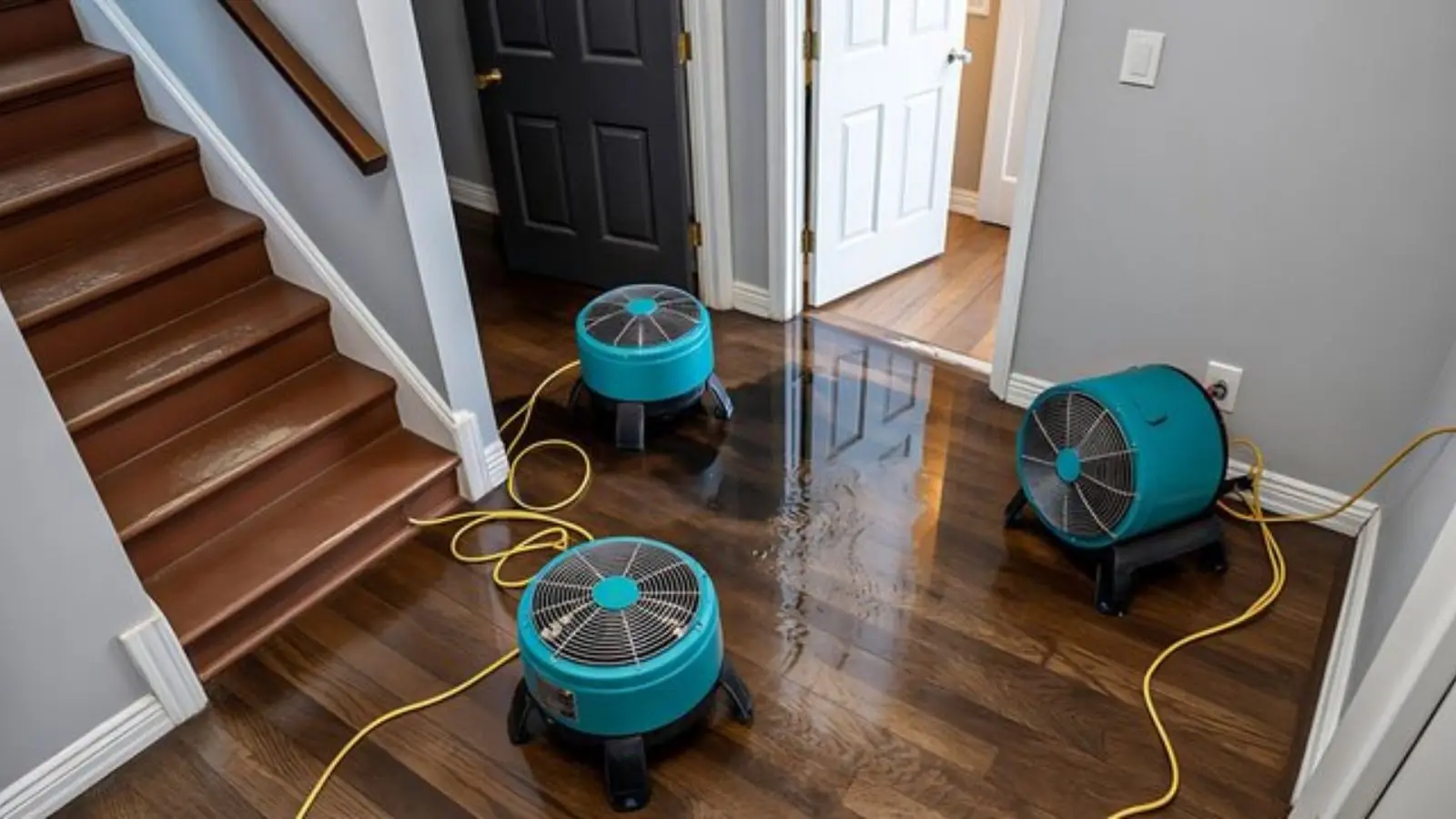
Water mitigation is the first three days, done right
Water mitigation means stopping a leak from becoming a bigger repair. It covers shutting off the source, removing standing water, finding hidden moisture and setting up drying equipment, all in the first 24 to 72 hours. If water is still moving in your Mission Viejo home, call our 24/7 line now, with same-day response when available.
While you wait, close the main water valve, cut power to wet rooms at the breaker only if the panel is dry and reachable, lift valuables off wet floors, and keep people and pets out of any water that came from a drain or toilet. Photograph everything before moving it. If you smell gas or see sparks, leave and call 911 first.
My wall is wet and the paint is bubbling: what is going on?
Bubbling paint, a soft baseboard, a ceiling stain that keeps growing or a floor that feels cool and damp all say the same thing: water is inside the structure, not just on the surface. Drywall acts like a sponge and pulls moisture upward from a wet floor or across from a leaking line.
The trade term for what fixes this is water mitigation. It is the work of locating where the moisture went, removing it and drying what can be saved before mold or rot gets a start. Wiping the surface or running a household fan does not reach the wet cavity behind the wall, which is why a moisture meter and thermal imaging camera come first.
Hours matter after a leak
Shut off the water and call our 24/7 line. Same-day response when available, and scope and price explained before work starts.
Your first 72 hours, in order
Hour 0 to 2: stop and secure
Close the source, make the electrical call, lift valuables and photograph the damage. Call the 24/7 line and describe where the water started and how far it traveled.
Hours 2 to 8: extract and inspect
Crews pull standing water with pumps and extraction units, then scan with moisture meters and a thermal imaging camera. The scan produces a moisture map: which walls, floors and ceilings are wet and by how much.
Hours 8 to 24: open and set equipment
Pad is lifted, baseboards are pulled and weep holes are drilled where trapped water needs a way out. Air movers and LGR dehumidifiers go in, placed by the moisture map rather than by guesswork.
Days 2 to 3: monitor and adjust
Crews return to take daily readings, shift equipment and decide what is dry, what needs more time and what has to come out. Drying is verified with meters, not by feel or by how long machines have run.
Signs that water has gone further than you can see
Paint blisters or peels
Moisture is pushing the coating off the drywall from behind. The wall is wet through, not just stained.
Baseboards swell or gap
Wood and MDF drink water from the floor. Swelling at the bottom edge means the wall cavity behind it is wet too.
Floors cup or buckle
Hardwood and laminate absorb moisture from beneath. Edges rise first, and the damage grows if the subfloor stays wet.
A musty smell with no visible water
Odor in a closed room points to damp insulation or drywall. A meter reading settles the question.
Warm, humid air indoors
A room that feels like a greenhouse after a leak is holding vapor. Dehumidifiers are needed to pull it out of the air and the framing.
What to do before the crew arrives, and what not to do
These steps are safe for most homeowners and they save drying time. Stop at any point where you would have to wade through water near an outlet, a panel or an appliance.
- Take dated photos and a short video of every wet surface before you move anything.
- Move small furniture, rugs and boxes to a dry room, and lift upholstered pieces onto foil or plastic blocks.
- Keep children and pets out of wet rooms, and out of any water that came from a drain or toilet.
- Do not enter standing water if a cord, outlet, panel or appliance is touching it. Call your utility or 911 first.
- Do not run a household vacuum on standing water, and do not switch on a ceiling fixture under a sagging or bulging ceiling.
- Write down when you first noticed the damage and where the water seemed to start, because the crew will ask.
None of this replaces extraction or drying. It simply keeps the loss from growing while the 24/7 line arranges a crew.
Why the Mission Viejo calendar matters
The National Weather Service reported that storms from February 4 to 8, 2024 hit Orange County hard, with 4 to 10 inches of rain. A multi-day soaking like that finds weak flashing, tired window seals and old roof penetrations. Leaks from a storm often show up days later as ceiling stains, so check ceilings and window corners after the rain stops.
Dry months bring plumbing and appliance failures instead. Regional housing data drawn from Census surveys puts about two-thirds of the city's homes in the 1970 to 1989 construction window, so original water heaters, supply lines and valves are worth inspecting. For a failure on the street side of the meter, contact your water district. Depending on your address that may be El Toro, Moulton Niguel, Santa Margarita or Trabuco Canyon.
Structural Drying
Structural drying is the longest and most technical part of mitigation. It removes moisture from framing, subfloor, drywall and concrete, not only from surfaces. The goal is to reach dry standards for each material, measured with meters. The ANSI/IICRC S500 standard for water damage restoration describes the principles, and you can ask any company whether its crews work to it.
Air movers push dry air across wet surfaces to lift moisture off them. LGR dehumidifiers pull that moisture out of the air so it does not settle back into walls. Specialty tools matter too: drying mats pull water out of hardwood, and injection drying treats wet wall cavities without tearing out finished drywall.
Most drying jobs run three to five days, though thick materials, hardwood and concrete can run longer. Equipment placement follows the moisture map, and crews adjust it daily because wet materials dry at different speeds. A house fan from the hardware store cannot do this. It moves air without removing moisture, and the humidity stays in your walls.
How to choose a mitigation approach
| Condition found | Likely approach | Typical drying focus | Trade-off |
|---|---|---|---|
| Clean water, caught early | Extraction, then drying in place | Wall bottoms, carpet pad, subfloor | Faster and less demolition |
| Water in wall cavities | Weep holes or injection drying | Insulation and studs | Small holes save larger repairs |
| Wet hardwood or laminate | Drying mats or board removal | Subfloor moisture content | Boards may cup even when dried |
| Wet insulation | Remove and replace | Framing behind it | Wet insulation rarely dries in place |
| Water sitting more than 48 hours | Remove affected materials, dry the rest | Mold risk checks | More demolition, more rebuild |
What drives the cost of mitigation
Water category
Clean, gray and contaminated water call for different protective gear and different decisions about what can stay.
Area and wall height
More wet rooms, more linear feet of wall and higher wicking mean more equipment and more labor.
Materials affected
Hardwood, concrete and thick insulation dry slowly. Carpet and drywall are easier but often come out if water sat.
Drying days
Air movers and LGR dehumidifiers are billed by how many days they run. Faster starts often shorten that count.
Rebuild scope
What comes out during mitigation has to be replaced later. Mitigation limits that list but cannot always avoid it.
Scope and price are explained before work starts. Want your real number? Call the 24/7 line and describe what you see.
Insurance, documentation and the 72-hour window
The California Department of Insurance says a homeowners policy may not cover ensuing damage if you did not take reasonable steps to protect the property. Starting mitigation quickly is one of those steps. The Department also advises keeping a log of every phone call and message with your insurer.
Sudden and accidental water damage is often covered, and gradual leaks often are not. Flood is typically excluded from standard policies and needs separate flood coverage through NFIP, which the city of Mission Viejo participates in. Check your policy and ask your insurer. Before rebuilding, ask the city's Building Services staff whether your repairs need a permit.
What mitigation does not do
Mitigation stops damage. It is not the rebuild, and it is not waterproofing. Replacing drywall, paint and flooring belongs to water damage repair. Sanitizing after contaminated water belongs to water damage cleanup. If water has been sitting long enough for mold to start, see our mold remediation page, because moisture must be dealt with before mold can be.
If liquid water is still standing, emergency water removal is the first call. Our base covers ZIPs 92691 and 92692, and we serve nearby towns as listed on our service area page. Hire only contractors you can verify on the CSLB site, and be wary of door-to-door offers after storms.
Questions about water mitigation in Mission Viejo
Do you handle water mitigation emergencies at night or on weekends in Mission Viejo?
Yes. The line is open 24/7, including weekends and holidays, with same-day response when available. We do not promise a specific arrival time. Tell dispatch what you see so the right crew and equipment are lined up.
My wall is wet and the paint is bubbling. What do I do?
Find and stop the source first, usually a supply line, a drain or a roof leak. Keep fans and heaters off the wall and call the 24/7 line. A moisture meter and thermal imaging camera show how far the water went before anyone cuts into the wall.
How long does drying take with air movers and dehumidifiers?
Most structural drying runs about three to five days, with longer times for hardwood, concrete and thick materials. The finish line is a meter reading at dry standard, not a calendar date. Crews check readings daily and shift equipment as materials dry.
Do you rent air movers or dehumidifiers?
No. We do not rent equipment. Drying equipment only works when it is placed from a moisture map, monitored daily and moved as readings change, and that is part of the job, not something to hand off. On a mitigation job the equipment arrives with the crew that sets it up and checks it.
What is the difference between mitigation and repair?
Mitigation limits the damage in the first days: shut-off, extraction, moisture mapping and drying. Repair is the rebuild afterward, such as drywall, paint and flooring. Mitigation done well can shrink the repair list.
Should I wait for my insurance adjuster before starting?
Do not let damage sit. Your insurer may not cover ensuing damage if reasonable steps were not taken to protect the property. Photograph first, call your insurer, and ask what it needs. Check your policy, since we cannot say what it will pay.
Can mitigation prevent mold?
Drying quickly removes the moisture mold needs, which lowers the risk. It is not a promise, because hidden moisture can still exist. If mold is already present, see our mold remediation page.