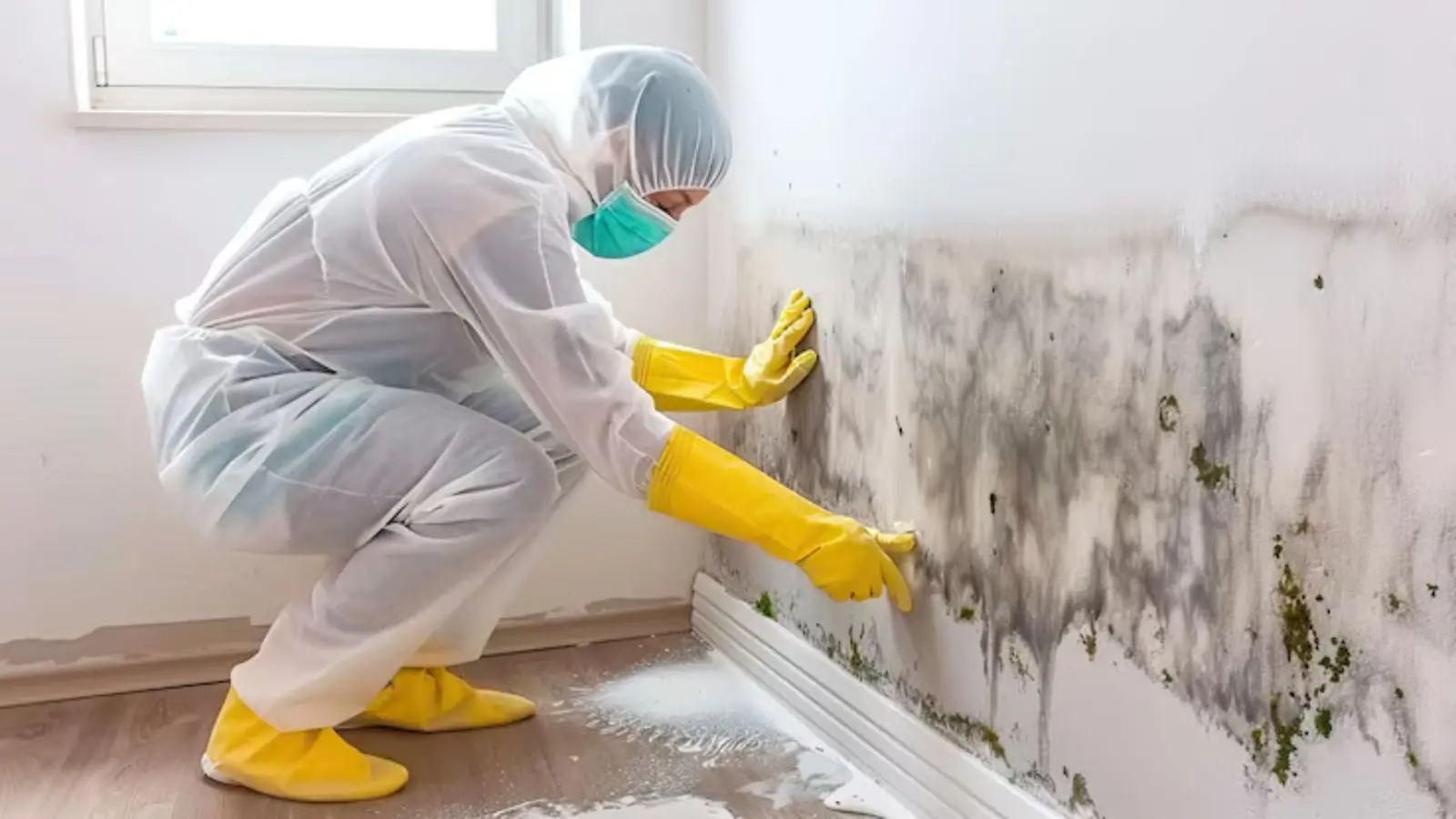
What mold remediation actually involves
Mold remediation in Mission Viejo, CA is the controlled removal of mold-affected materials and the cleaning of surfaces, done after the moisture source has been found and stopped. It is a separate job from drying and from rebuilding, though it often sits between them.
Mold needs moisture to grow, so the real work starts with the leak, not the spores. A bathroom fan that vents into the attic, a slow toilet supply line or a roof leak that wet the insulation all count. Without fixing the water, any cleanup is temporary.
The industry reference for the work is ANSI/IICRC S520, the published standard for professional mold remediation. Ask any company whether its crews work to it and how.
Musty smell, dark spots on a closet wall, or bubbling paint?
Those are the three things homeowners describe most often, and none of them proves what is behind the wall. A musty odor, a spotty patch on a closet wall or paint that blisters can come from a hidden leak, a condensation problem or old staining.
What they do tell you is that moisture may be present, and that is worth finding out. The trade term for the next step is mold remediation, which starts with an inspection and a moisture reading, then moves to containment and removal only if growth is actually there.
We do not diagnose health effects. Health questions belong to a physician.
Found a stain or a smell after a leak?
Call and tell us what you see. Same-day response when available.
Where the moisture comes from: common sources in a house
Toilet and sink supply lines
A small weep behind a vanity or at the toilet base keeps cabinet floors and subfloor damp for weeks.
AC condensate line
A clogged line or overflowing drain pan drips into the ceiling or closet below. This is a frequent source in summer.
Roof and flashing leaks
Water follows rafters and wets attic insulation before a stain ever shows on the ceiling below.
Siding, windows and stucco
Failed caulk or flashing lets rain into wall cavities that dry very slowly.
Bath and laundry humidity
A fan that vents into the attic, or a dryer vent that leaks inside, adds moisture to surfaces day after day.
If a source like these is still active, call a plumber, roofer or HVAC technician first or at the same time. We will point to what we found, and then your trade fixes it.
Mold Removal and Black Mold Cleanup
Black mold is a color, not a diagnosis. Mold can be black, green, white or gray, and you cannot tell kinds apart by looking. We do not name species or make health statements. We treat any visible growth the same way: contain it, remove it, and clean it according to the S520 standard.
Containment means plastic sheeting sealed with tape around the work area, with negative air machines pulling air out through HEPA filters so spores do not drift into the rest of the house. Crews wear respirators, gloves and disposable suits. Doors and returns in the area are sealed.
Porous materials with growth, such as drywall, insulation, carpet and pad, are removed and bagged. Hard, non-porous surfaces like framing, tile and glass are cleaned using HEPA vacuums and damp wiping, and wood framing may be sanded or wire brushed. We do not rely on spraying bleach, which can leave moisture and does not reach inside drywall.
After removal, HEPA air scrubbers run, surfaces are wiped, and the area is dried before any new materials go in. Small areas of surface mold on a bathroom tile are different, and a homeowner can often wipe those. Larger or hidden growth needs a professional plan.
Mold After Water Damage
When a house gets wet, mold becomes a timing question. Wet drywall, carpet, wood and cardboard can start supporting growth quickly, often within a couple of days if they stay damp and warm. That is why water mitigation and fast drying matter so much.
Link the mold to the leak. If the stain is under a toilet, the supply line or wax ring is the suspect. Under a sink, check the trap and the shutoff valve. A ceiling spot near an air handler usually means the condensate line. Roof leaks tend to leave rings that grow after every rain, and siding or window leaks show up on exterior walls.
Fix the leak first. Remediation done while water is still entering is wasted money. Once the source is repaired, we check moisture again with a meter and thermal imaging camera, then remove what has to go.
No company can honestly promise mold will never return, because that depends on moisture control afterward. What we can do is remove growth properly, dry the structure, and tell you what we found so you can keep humidity and leaks in check. For a very recent leak, emergency water removal can dry things before growth starts.
How the work goes from first call to final dry readings
Inspect and find the source
We look at the area, take moisture readings and check for the leak that fed the growth. Thermal imaging cameras find damp areas behind finished surfaces.
Set up containment
Plastic barriers, negative air machines and HEPA filtration separate the work zone from the rest of the home.
Remove and clean
Affected materials are cut out and bagged. Remaining surfaces are HEPA vacuumed and damp wiped.
Dry and hand off
Air movers and LGR dehumidifiers dry the cavity. Then clearance is arranged, and rebuilding follows.
Options and trade-offs: what you can do yourself, and what you should not
| Situation | Reasonable approach | Trade-off |
|---|---|---|
| Small spots on tile or sealed surface | Wipe with detergent, fix the humidity | Cheap, but growth may be in the wall behind |
| Spots on painted drywall | Have it checked with a meter before painting over | Paint covers the symptom, not the moisture |
| Growth on the back of drywall or in insulation | Professional containment and removal | More upfront work, less spread risk |
| Large area or repeated return | Source inspection, then full remediation | Longer job, plus rebuild afterward |
| Sewage or flood water involved | Treat as contaminated, see flood damage restoration | Different safety steps apply |
The honest trade-off is cost against certainty. A DIY wipe is quick, but painting over a damp wall or ignoring a leak is how a small spot becomes a cut-out. We tell you where your situation sits and let you decide.
Mold Testing, Inspection and Clearance
A visual inspection and moisture readings tell you where the damp is and where growth sits. Testing adds numbers: air samples, surface samples and lab results compared against an outdoor sample. A tester can also say whether the indoor air looks different from outside.
Clearance testing is done after remediation to confirm the work area is clean. The best practice is an independent tester who does not work for the remediation company. That separates the person doing the work from the person grading it.
Homeowners often ask about selling or refinancing. A buyer, agent or lender may want written clearance, and an independent report can answer that. We cannot promise what any lender will accept, so ask your lender or agent what they require before you order testing.
Testing is a tool, not a verdict. Results depend on the sampling method and the day, so ask the tester to explain what they sampled and how.
What changes the cost of mold work
Size of the affected area
A closet wall is a smaller job than a whole attic or a bathroom plus the rooms next to it.
Materials involved
Drywall and insulation come out. Framing can often be cleaned. Cabinets and flooring vary.
Containment and equipment
Negative air machines, HEPA scrubbers and protective gear run for the length of the job.
Moisture source and drying
If the structure is still wet, drying time and equipment add to the scope.
Testing and rebuild
Independent clearance and the repair afterward are separate from removal.
Want your real number? Call and describe what you see. We explain the scope and price before work starts.
Insurance, licensing and contracts
Coverage for mold varies by policy and by cause. Sudden and accidental water damage is often covered, along with some resulting growth, while gradual leaks and neglect often are not. Check your policy and ask your insurer. The California Department of Insurance says insurers may decline ensuing damage if you did not take reasonable steps to protect the property, and advises keeping a log of calls and letters.
For licensing, ask whether your state licenses mold work and ask the company to show its contractor licence. The Contractors State License Board says a home improvement contract must show the licence number, you have three days to cancel, and the down payment is capped. Check the licence on the board's website.
We are licensed and insured. The scope and price are explained before work starts, and we do not promise approval or payout from your insurer.
Mission Viejo homes and mold risk
About two-thirds of Mission Viejo homes were built between 1970 and 1989, according to housing data from the Southern California Association of Governments. Older roofs, supply lines, window flashing and bath fans are where hidden moisture starts, so those are the first places we look.
The National Weather Service reported that storms on February 4 to 8, 2024 dropped 4 to 10 inches on Orange County. After a stretch like that, a roof or window leak can wet attic insulation for days before a stain shows. If you see a stain after a storm, call, then follow with water damage repair once everything is dry.
Roughly one in six homes in the city is in a multifamily building, per the same data. In a condo, a neighbor's leak can feed growth in your wall, so photograph and notify your HOA and manager right away. Neighbors we serve include Laguna Hills and Lake Forest.
Mold questions from Mission Viejo homeowners
My closet wall has dark spots. Is it mold, and what do I do?
We cannot tell by looking, and color does not identify it. Dark spots can be mold, dirt or old staining. A moisture reading and a close look tell you more. Keep the closet ventilated, and call us to check.
I smell something musty but see nothing. What now?
A musty smell can mean moisture is trapped somewhere you cannot see. Start with a moisture meter and a thermal imaging camera on the likely walls and ceilings. If there is no hidden moisture, the odor may come from humidity alone.
My paint is bubbling on a bathroom ceiling. Should I scrape and repaint?
Not yet. Bubbling means moisture was behind the finish. Check for a roof leak, a fan that vents into the attic or a leak from above, then dry the area. Repainting without that step usually fails.
Does black mold always need professional removal?
No. A small patch on a hard surface like tile can often be wiped. Growth on drywall, in insulation or behind walls is a professional job. Color alone does not decide it, size, material and moisture source do.
Do I need a mold test before remediation?
Not always. A visual check and moisture readings often show what to do. Testing helps when growth is hidden, when you want documentation, or for a home sale or loan. Clearance testing after the work is best done by an independent tester.
Will the mold come back after you remove it?
No honest company can promise it will not, because it depends on moisture afterward. We remove the growth and dry the structure, and we tell you the cause so you can fix leaks and manage humidity.
Does insurance cover mold removal?
It depends on your policy and what caused the moisture. Sudden and accidental water damage is often covered. Gradual leaks often are not. Check your policy and ask your insurer, because we cannot promise approval.
How do I know the mold company is licensed?
Ask whether your state licenses mold work and ask the company to show its contractor licence. Then look it up on the Contractors State License Board website, and make sure the licence number is on the contract.