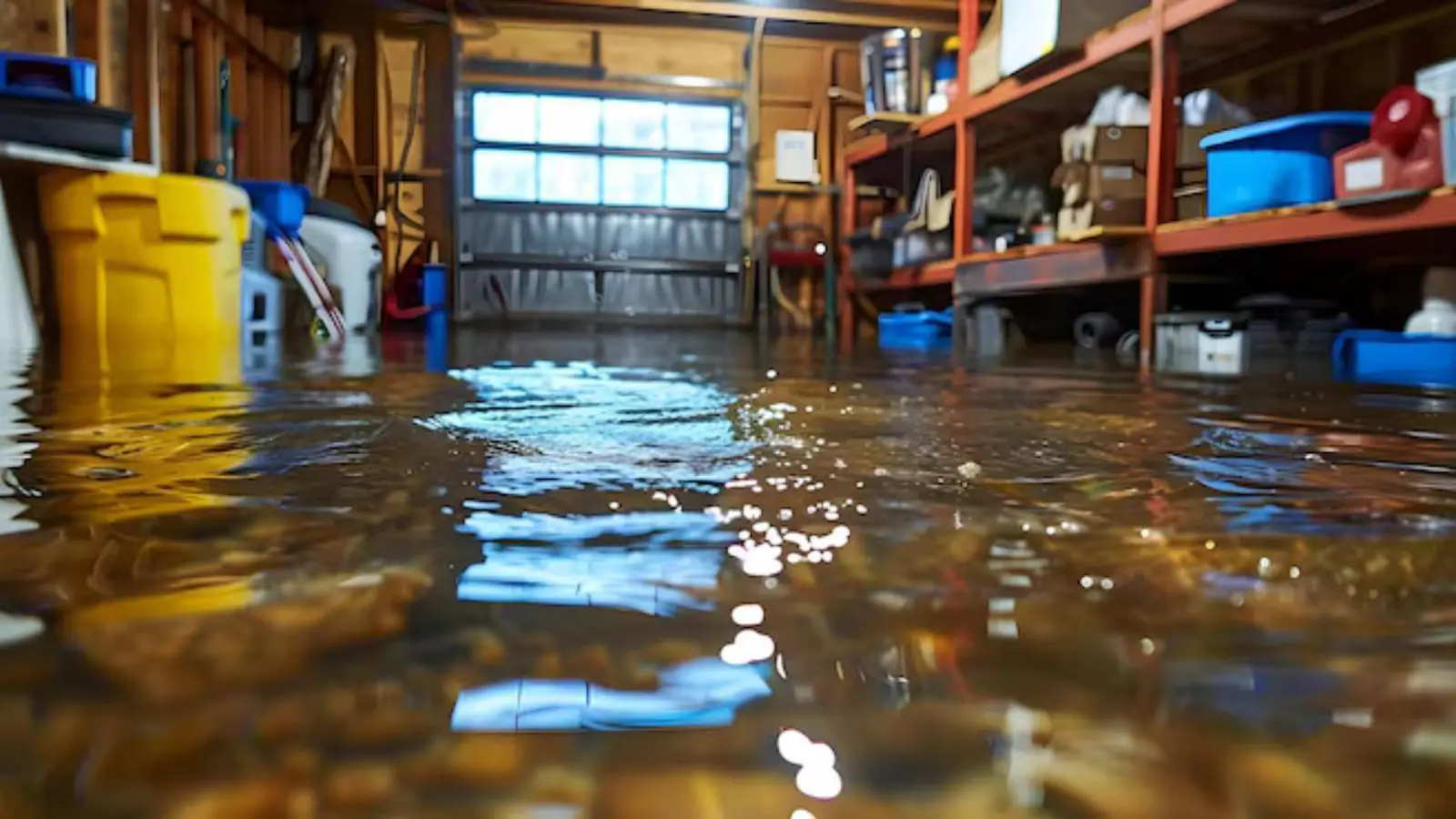
Where the water is coming from decides what to do
Garage flooding after a storm usually has one of four sources: the driveway sloping toward the door, a clogged gutter or downspout dumping beside the foundation, a yard drain that cannot keep up, or water pushing up through floor joints or cracks. Look first, then act.
Stand at the garage door with a flashlight during or just after the rain. Water sheeting across the driveway is a grading and drainage problem. Water pouring from a downspout at the corner is a gutter problem. Water rising from a floor crack or wall joint is groundwater, and it is harder to stop.
Check these before the next storm
Gutters and downspouts
The city advises residents to clear gutters, downspouts and low areas of yards and patios to avoid water back-ups. Do it before the rainy season. Make sure each downspout empties several feet away from the foundation, not at the slab edge.
Yard and patio drains
Pull leaves, mulch and toys from the grate and the drain pipe below. Pour a bucket of water into the drain and watch it empty. Slow drainage on a dry day means it will back up in a storm.
Driveway and door threshold
Check the garage door seal and the threshold gap. A cracked seal or low threshold lets sheeting water in. Sandbags or a rubber threshold barrier can add protection for the worst storms.
Street catch basins
If the storm drain in front of your home is clogged with leaves or debris, call the city's Public Services department instead of reaching into it. Do not stand in moving water.
Storm water already in the garage?
Call the 24/7 line. Same-day response is available when schedules allow, and scope and price are explained before work starts.
Free sandbags: how the city handles them
According to the City of Mission Viejo's storm preparation page, free sandbags are available around the clock, first come, first served, at seven city facilities including Alicia Park, Gilleran Park and the Mission Viejo Civic Center. The limit is 10 per resident.
Sandbags slow water, they do not seal it. Stack them in a row across the garage door or along the low spot where sheeting water arrives, overlapping like bricks. Place the closed end toward the flow. Use plastic sheeting under them if you can, and remember that a wall of sandbags will not stop groundwater from below.
What recent storms told Orange County homeowners
| Event | What the National Weather Service reported | What it means for a garage |
|---|---|---|
| January 14 to 16, 2023 | Two waves of heavy rain caused widespread flooding in San Diego, Orange and Riverside counties | Repeated waves can overwhelm drains before water has cleared |
| August 20 and 21, 2023 (Tropical Storm Hilary) | Event dates per NWS San Diego. Roughly 1.5 to 3 inches fell in coastal and valley areas generally on August 20 | Rare summer tropical rain finds clogged gutters and dry-season debris |
| February 4 to 8, 2024 | Hard hit was Orange County, where 4 to 10 inches of rain fell | Multi-day soaking tests roofs, windows and slab edges |
The Weather Service does not break out Mission Viejo totals in those summaries, so treat them as regional context. The city says that during Hilary it distributed roughly 3,500 sandbags and reported no major damage in the community. Two residents used a Red Cross shelter at the Norman P. Murray Community and Senior Center. The takeaway is simple: prepare before the storm, because supply is first come, first served.
When water in the garage becomes a contamination problem
Rain that runs in from outside crosses driveways, yards and streets before it reaches your garage. It picks up soil, oil, fertilizer and debris. Restoration crews working to the ANSI/IICRC S500 standard generally treat water that enters from outside the structure as Category 3, which means porous materials that soaked it up may need removal.
Water from a clogged sewer line or a backed-up floor drain is also Category 3. If it smells like sewage, stay out, keep children and pets away and call the 24/7 line. Never run electrical equipment while standing in water, and call 911 or your electric utility if water reaches a panel or outlets.
Category 2 water, such as overflow from a washing machine or a dishwasher, carries some contamination but less. A garage with stored cardboard, drywall on the lower wall or insulation holds water well, so these items often go to the curb even when the slab itself can be cleaned.
First steps once water is inside
Protect people first
Stay out of standing water if power is on in the garage, and do not touch the panel with wet hands. Turn off power only if the panel is dry and you can reach it safely.
Move belongings up
Lift boxes, tools, tires and anything electrical onto shelves or into dry rooms. Keep wet cardboard apart from items you hope to save.
Remove water
A wet vacuum or pump moves standing water. Do not use a household vacuum. Squeegee water toward the exterior door.
Photograph and call
Document the water line, the damage and your efforts. Then call a crew to extract, dry and check walls and flooring.
Mission Viejo notes: flood maps, insurance and storm response
The city participates in the National Flood Insurance Program, so homeowners, renters and businesses are eligible to buy flood insurance. Find your address on the FEMA flood map through the FEMA Map Service Center or the city's GIS tools, and ask the City Engineer if you need help reading it. Do not assume your zone, because maps are address-specific.
The California Department of Insurance says standard homeowners policies do not cover flood, and policies typically exclude flood, mudslide and debris flow. Flood claims go to the federal NFIP. A new flood policy takes effect 30 days after purchase unless a lender requires it, so buying one after the forecast is too late.
A sudden pipe burst inside the garage is different from storm water entering from outside. The first is often a water damage claim and the second a flood question, so describe the cause accurately to your insurer. Crews dispatched from Mission Viejo also respond in Lake Forest and Rancho Santa Margarita, where creeks and canyon runoff shape local flooding.
Garage and yard flooding questions
How many free sandbags can I get in Mission Viejo?
The city's storm preparation page lists a limit of 10 per resident, available around the clock at seven city facilities, including Alicia Park, Gilleran Park and the Civic Center. Supply is first come, first served, so go early.
Does homeowners insurance cover storm water in the garage?
Flood is usually excluded from standard homeowners policies, according to the California Department of Insurance, and flood claims go to the NFIP. Sudden and accidental water damage from plumbing is often covered. Read your policy and ask your insurer.
Is rainwater in the garage considered contaminated?
Water that enters from outside is generally treated as Category 3 under industry practice, since it crosses the ground. Ask the crew to explain the category and what it means for drywall and stored items.
Can you pump out and dry a flooded garage?
Yes. Crews extract water, remove soaked materials and dry the walls and slab with air movers and dehumidifiers. See flood damage restoration for the process.
Do you waterproof garages or fix drainage?
No. Restoration cleans and dries after water enters. Drainage and waterproofing are separate work done by other trades, so ask a licensed contractor about grading and drains.
Who do I call for raw sewage in the garage?
Stay out, keep people and pets away and call the 24/7 line for emergency water removal. Call your water district too if it may be a main line problem.