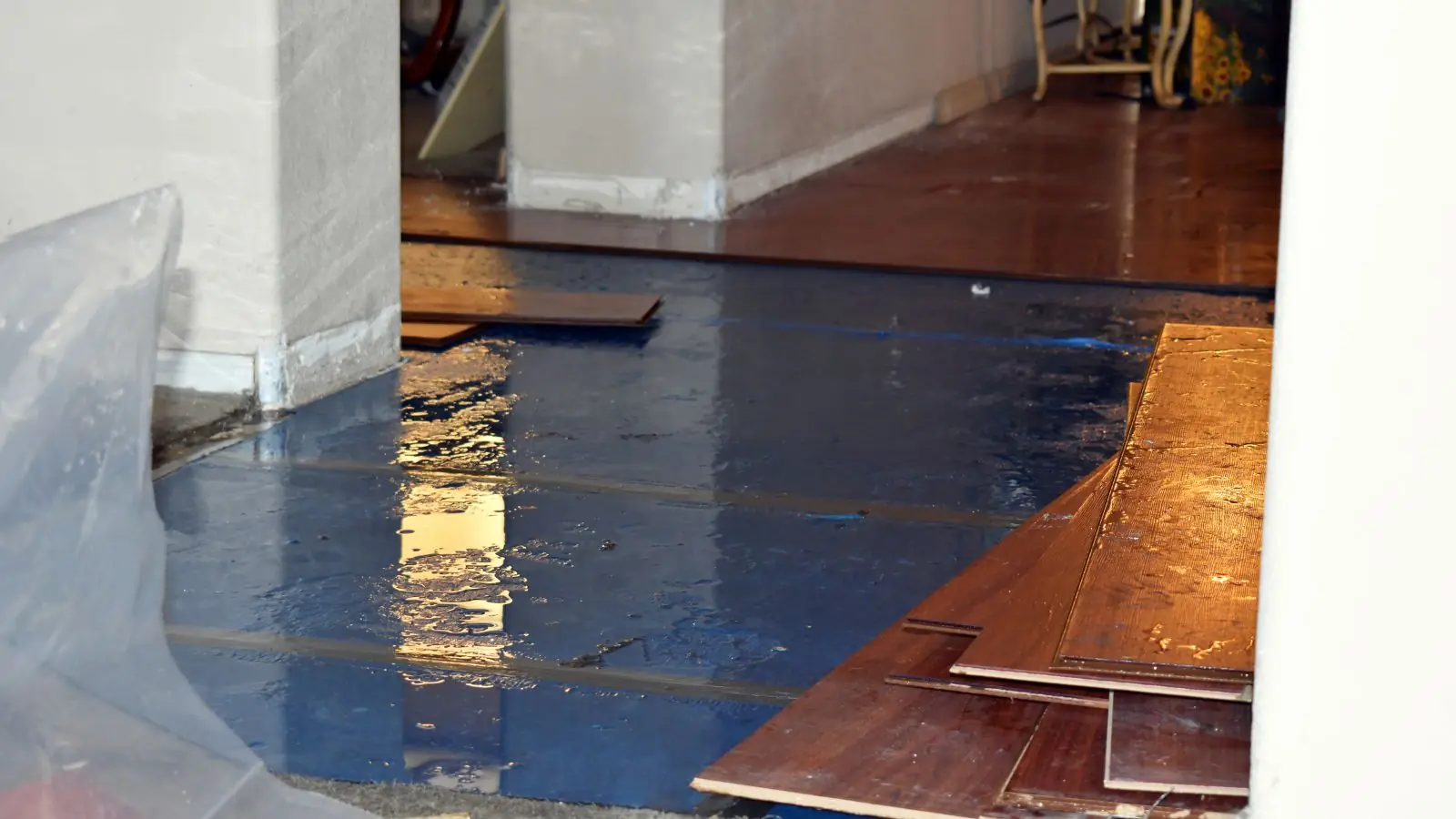
The short answer: most wet laminate is replaced, not dried
Laminate is a photo layer on top of a fiberboard core, usually sold as click-together planks. The core is made of compressed wood fibers and resin, and those fibers swell when water reaches them from the edge or the underside. Once swollen, they rarely return to their original thickness.
A thin film of clean water wiped up within minutes can leave a floor unharmed. Standing water that sits for hours, or a leak from below, usually does not. If the seams have peaked or the plank ends have lifted, plan on replacing the affected rows and drying everything beneath them first.
Five quick checks before you decide
- Run a fingertip along each seam. A raised lip at the edge means the core has swelled.
- Look across the floor at a low angle with a flashlight. Waves, humps or a roof-shaped ridge (peaking) mean boards are pushing against each other.
- Press on the plank near a wall or appliance. Spongy or crunchy feel means the core is crumbling.
- Lift a loose plank at a doorway or baseboard gap, if the floor allows. Look at the underside and the underlayment for dark stains or a musty smell.
- Check the planks and subfloor with a moisture meter, or ask a restoration crew to. Visible damage on top often hides a wetter subfloor.
Floor wet and still spreading?
Call the 24/7 line. Scope and price are explained before work starts, and same-day response is available when schedules allow.
Why laminate rarely dries in place
Laminate floats over a thin foam or felt underlayment. Water flows under the planks, spreads sideways and sits against the subfloor, where nothing evaporates quickly. The top layer is sealed against moisture, so the water cannot escape upward either. It tends to leave through the same seams it entered, slowly.
Drying in place sometimes works for very small, very fast spills. For anything larger, crews usually pull a few rows, open up a path for air, then run air movers and LGR dehumidifiers until the subfloor and baseboards read dry. If you leave the water trapped, the underlayment can grow mold, and swelling continues.
Dry, repair or replace: a decision table
| What you see | Likely cause | Usual outcome |
|---|---|---|
| Clean water, wiped up fast, no seam lift | Small spill, minor overflow | Often fine after drying the surface and gaps |
| Slight edge lift at a few seams, dry after a day | Brief exposure to clean water | Pull affected planks, dry underneath, may reinstall if undamaged |
| Peaked seams or humps across several rows | Water under the floor for hours or days | Replace affected area, check subfloor |
| Whole room cupped or bubbled | Burst supply line, slab moisture, big appliance leak | Replace flooring and underlayment, dry subfloor |
| Dark stains, odor, soft spots | Slow leak or long-term moisture | Remove flooring and underlayment, assess for mold |
Click-lock laminate can sometimes be taken apart and reused if planks are not swollen. The locking edges are the first part to fail, though, so reuse works only on lightly exposed planks. Label each plank on the back as you lift it so the pattern goes back in order. Planks from under a refrigerator or dishwasher, where water pooled longest, are the ones least likely to survive.
What to do in the first hour
Stop the water
Shut the supply valve at the dishwasher, fridge line, washing machine or the main valve. A slow drip under a sink can soak a kitchen floor in a day.
Remove standing water
Mop up with towels or a wet vacuum. Lift rugs, mats and furniture legs so wet spots can be seen.
Open the edges
Pop off baseboards or quarter-round trim if you can do it without damage. This gives air access to the expansion gap and the edge of the planks.
Photograph and call
Take photos of each wet area and any labels on the floor. Then call a crew for moisture mapping before you pull anything permanently.
Check the subfloor before any new plank goes down
New laminate laid over a damp subfloor repeats the problem. Concrete slabs, plywood and underlayment each need a dry reading before the flooring goes back. A moisture meter and, when needed, a thermal imaging camera show which patches are still wet.
If the subfloor is wood and has swollen at the joints, it may need sanding or a patch. If it is concrete, a lingering damp patch means more drying time, not a quick coat of sealer. Ask the contractor what readings will confirm dry, and wait for them before the flooring goes in. Industry practice follows the ANSI/IICRC S500 water damage standard, so ask whether the crew works to it.
This is also when a floor-covering installer matches the plank style. Discontinued patterns can force a larger replacement than the damage requires, which affects cost. Your insurer may care about this, so ask before ordering material.
What the final scope depends on
Price is set by the water category, the area affected, the thickness and type of the laminate and underlayment, how many days of drying are needed and how much rebuilding comes after. A single room with a clean-water leak looks very different from a flooded kitchen and hallway. Want your real number? Call, and the scope is explained before work starts.
Mission Viejo notes: laminate in local homes
According to Census-based housing data compiled for the region, about 71 percent of Mission Viejo's housing units are single-family detached homes and about 14 percent are buildings with five or more units. Single-family owners usually have a larger floor area to dry. Condo owners have shared walls and neighbors, so water may be coming from a unit above.
The Census also reports that about 77 percent of homes in the city are owner-occupied. If you own the unit, document everything. The California Department of Insurance advises keeping a log of every phone call and message with your insurer, and notes that a policy may not cover further damage if you did not take reasonable steps to protect the property. In practice, that means stopping the water and starting drying promptly.
Before replacing subfloor or moving plumbing, ask the city's Building Services division whether your repair needs a permit. The city says permits and inspections go through its online self-service portal. Crews serving Mission Viejo also work in Laguna Niguel and San Juan Capistrano, where the same laminate and underlayment questions come up.
Laminate water damage questions
Is laminate flooring a good choice for condos in Mission Viejo when a neighbor's pipe leaks?
It is risky. Water from above spreads under the planks, and laminate edges soak it up. In multifamily buildings the leak may start in another unit, so photograph the damage and notify your HOA or building manager promptly.
Can swollen laminate go back to normal?
Rarely. Swelling happens in the core fibers, and drying often leaves the planks thicker at the edges. Slight changes sometimes ease, but peaked seams usually mean replacement.
How long does laminate take to dry?
Surface moisture dries in hours. The core and subfloor can take several days with air movers and an LGR dehumidifier. Drying time depends on how much water got under the planks.
Is waterproof laminate really waterproof?
Products sold as waterproof resist surface water better, but the seams and edges can still let moisture through. A flood from a supply line is a different event from a spilled glass, and the underlayment still needs to dry.
Will insurance cover a laminate floor damaged by a leak?
Sudden and accidental leaks are often covered, and slow leaks or neglect often are not. Flood is usually excluded from standard homeowners policies. Read your policy and ask your insurer.
Who should I call for a flooded floor?
Start with a company that handles water damage cleanup and drying. They check the subfloor and moisture before any new flooring is ordered. For mold concerns, a mold remediation crew can assess.