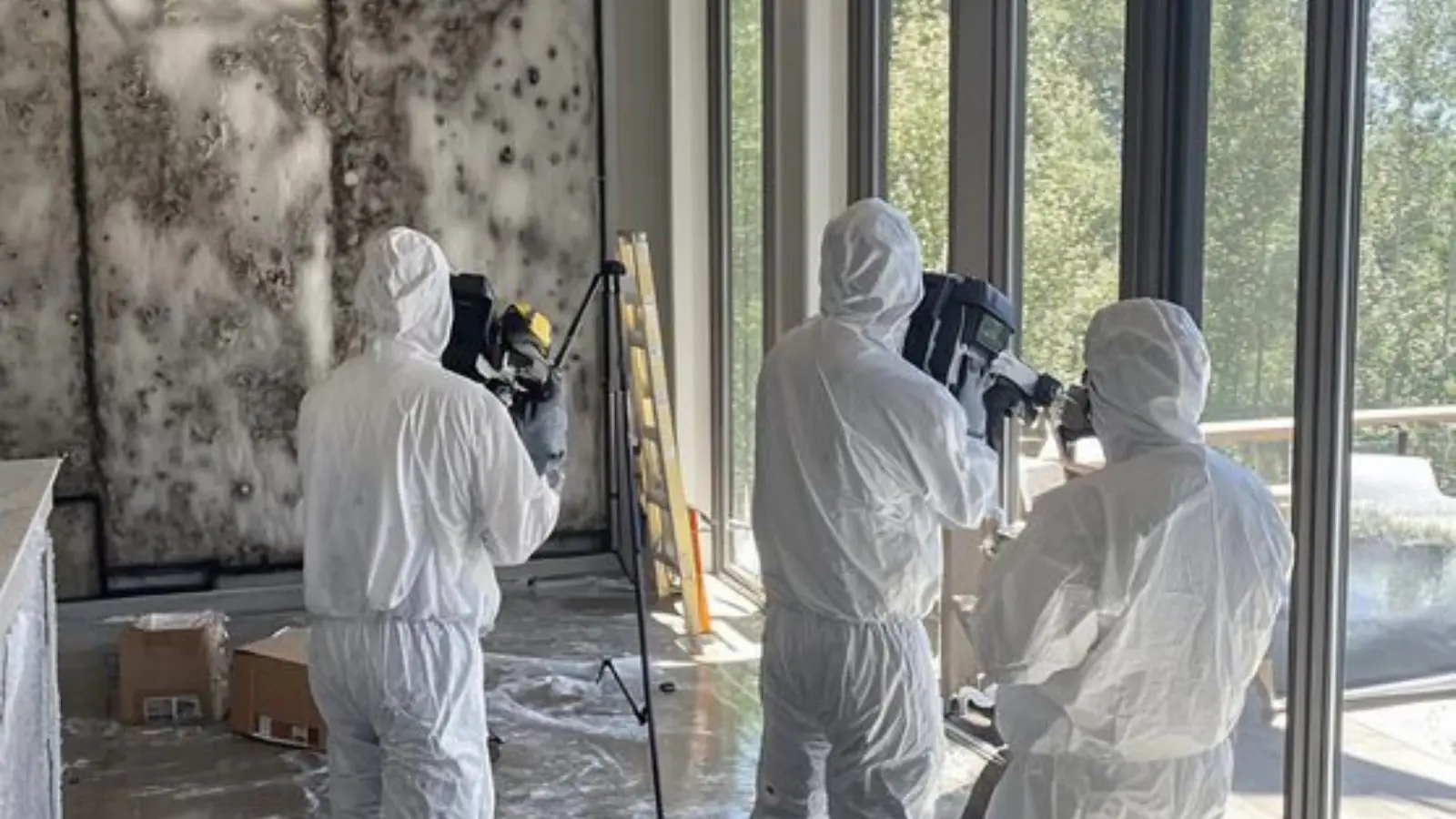
A scenario: the inspector found a stain
You have an offer on the house. The buyer's inspector found a damp, stained wall behind the water heater or beneath the upstairs bath, and the report says possible mold. The deal is not dead, but now you need to answer two questions. Is it really mold, and if it is, can you show it was handled correctly?
That second question is what post-remediation clearance testing answers. It is a documented check, done after the cleanup, that the work area is dry, visually clean and sampled against a baseline. It is not a replacement for fixing the leak, and no document can promise how a lender or a buyer will react.
What clearance testing actually is
Clearance, also called post-remediation verification, usually has three parts. First, a visual check of the work area for remaining debris, staining or damp materials. Second, moisture readings to confirm the framing and any rebuilt materials are dry. Third, in many cases, air or surface sampling analyzed by a laboratory and compared with an outdoor sample taken at the same time.
The tester then writes a report. It states what was checked, where samples were taken, what the lab returned and whether the area met the criteria set for the job. Criteria are agreed on before the work starts, which is why you want the tester involved early.
One sampling caution: a single air sample is a snapshot. Disturbed dust, an open window or a running HVAC fan can change results, so a good tester notes conditions and often takes more than one sample. This is also why the sampling plan should be written down: where, how many, and under what conditions.
Selling soon with a mold finding?
Tell us what the inspector found and when you close. Same-day response when available, with the scope and price explained before work starts.
Who should perform it
An independent tester
A consultant or assessor who does not do the removal. They have no stake in the outcome, and their report holds more weight with a buyer or an escrow officer.
Not the remediation crew alone
A contractor grading its own work has an obvious conflict. Many companies will tell you this and welcome an outside party.
A lab that is accredited for the test
Ask the tester which laboratory processes the samples and whether it is accredited for mold analysis.
The sequence from start to report
Define the scope and criteria first
An independent assessor looks at the damage, writes the protocol and states what clearance will mean for this job. Doing this before work begins prevents arguments later.
Fix the water, then remediate
The moisture source is repaired. A mold remediation crew contains the area, removes affected materials with HEPA filtration and dries the space to normal readings.
Verify dryness and cleanliness
The tester reads moisture levels, inspects the cleaned surfaces and collects the agreed samples, including an outdoor reference.
Receive the written report
The lab results and the tester's conclusion come back in writing. If the area does not pass, the crew corrects the issue and the area is retested.
Questions to ask before you hire anyone
- Are you independent of any company that removes mold, and do you disclose any relationship?
- What standard or protocol will the clearance follow, and will you share it before work starts?
- What samples will you take, and will there be an outdoor baseline?
- Which laboratory analyzes the samples?
- What does the report say, and will it be addressed to me for my transaction file?
- What happens if the area fails, and who pays for retesting?
- Does your remediation partner or recommended crew follow ANSI/IICRC S520 for mold remediation?
Nobody can promise that a lender, buyer or agent will accept a report. Treat clearance as documentation that you took the right steps, and ask the parties in your own transaction what they require.
Comparison: three ways sellers handle mold
| Approach | What you get | Trade-off |
|---|---|---|
| Ignore it and disclose | Fast, nothing to schedule | Buyer may ask for repair credits or walk away |
| Remediate with no third-party check | Mold is removed and the area is rebuilt | No independent record that it was done to a protocol |
| Remediate, then independent clearance | Written report on dryness and sampling | More steps, plus the testing fee and some delay |
| Test first, then decide | Know whether growth is real before spending | A positive result still needs the source fixed |
Which row fits depends on your timeline and what the buyer's agreement requires. Ask your real estate agent how the disclosure rules apply to your sale, since disclosure duties are a legal question this page cannot answer.
Where the cleanup fits in
Clearance only makes sense after the water problem is solved. A wet wall that was resealed is not clear. If the damage came from a burst line or a slow leak, the first job is drying, covered in water damage cleanup, and then the removal of affected material under mold remediation.
Plan the timeline backward from your closing date. Drying takes days, remediation takes more, lab results take additional time, and rebuild comes last.
Mission Viejo notes: contracts, permits and homes that sell
California's Contractors State License Board says a home improvement contract must show the contractor's license number. It also caps the down payment at 10 percent of the price or a fixed dollar limit the board publishes, whichever is less. You generally have three days to cancel. The board's disaster guide also warns against rushing into repairs. Read every remediation or rebuild contract against that list before signing, especially when a closing date creates pressure.
Rebuilding drywall after remediation may need a permit depending on the scope, and the city's Building Services page does not state a rule for water or mold repairs. Ask Building Services, which handles permits through its online portal, before the walls are closed. Open or unpermitted work can complicate a sale.
Census figures show about 77 percent of Mission Viejo homes are owner-occupied, and state Department of Finance data shows about 71 percent of the housing is single-family detached. That means most sellers here deal with these questions directly, so keep invoices, moisture logs, photographs and the clearance report together in one folder.
Mold clearance and selling: common questions
Do Mission Viejo buyers' agents usually require a clearance report?
There is no single rule. It depends on the contract, the inspection findings and the parties. Ask your agent and your buyer's agent what they expect, rather than assuming.
Is clearance the same as a mold inspection?
No. An inspection or assessment looks for mold and moisture before the work. Clearance happens afterward and checks that the work met the criteria. Some testers do both for different jobs, and that is fine as long as they do not also perform the removal.
Can the company that removes the mold also clear it?
It is better if they do not. The contractor can confirm its own completion of the job, but an independent report is the stronger record. Ask the remediation company whether it works alongside outside testers.
Will a clearance report make my lender approve the loan?
No. Lenders and appraisers set their own conditions. Clearance is documentation, and any lender question should go to your loan officer.
How long does the whole process take?
Allow for drying, removal, rebuild and lab time. Small jobs move quicker than large ones, and any failed retest adds days. We do not promise a schedule before the area is assessed.
Do you serve sellers in Laguna Hills and Rancho Santa Margarita?
Yes. Crews dispatched from Mission Viejo work in Laguna Hills and Rancho Santa Margarita. Call and describe the damage and your timeline.