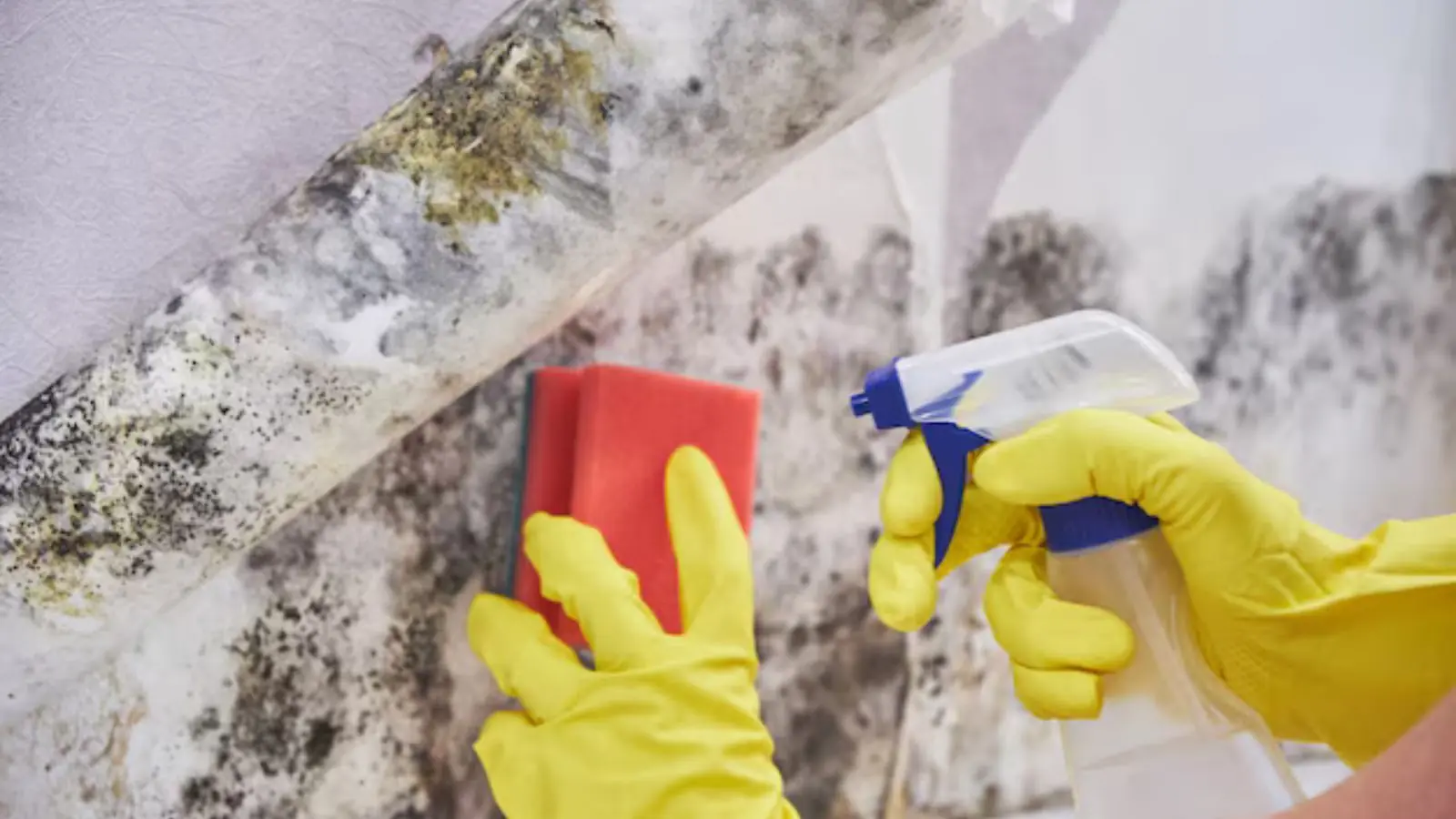
Fix the moisture, then deal with the mold
Every wall mold problem is a moisture problem first. A wall does not grow mold because it is dirty. It grows mold because water got in, from a plumbing leak, a window, a roof, a sweating pipe or a long-running humidity problem. If you remove the growth and leave the source, it will come back.
So the order is always the same. Find the source and stop it. Dry the wall. Then clean or remove what is moldy. Skipping straight to the last step is the most common mistake, and it is why the same patch keeps coming back behind the same couch.
Three wall types, three different jobs
Painted drywall that is still firm
If the paint film is intact, the wall is hard, and the growth sits on top, this is a surface job. A small area can be cleaned with detergent and water, then dried. Mold that has soaked through the paper facing is a different matter: the paper is organic food for it, and surface cleaning will not reach it.
Soft, swollen or crumbling drywall
Gypsum that has absorbed water loses strength. If you can push a finger into the wall, or the board bulges at the base, the material is generally cut out and replaced rather than cleaned. Crews usually remove a clean margin beyond the visible edge, since growth often extends past what you can see.
Walls behind wallpaper
Wallpaper traps moisture, and paste is food. Dark spots showing through, bubbled seams or a musty smell at the wall edge suggest the problem is behind the paper. Peeling it back in a small test spot tells you what is there, but if you find growth, stop and keep the work contained.
Not sure how far the wall mold goes?
Describe the wall and the stain, and we can talk through whether it sounds like a cleaning job or a removal job. Scope and price explained before work starts.
The DIY line: size, surface and safety
A common rule of thumb in homeowner mold guidance is that areas under about 10 square feet on hard, non-porous or well-sealed surfaces can be handled by the household. Beyond that size, or on drywall, insulation or anything soaked, a professional with containment is the better route. The size rule is a guide, not a law.
If you do clean a small spot, wear an N95 respirator, goggles and gloves, and seal off the room with plastic and tape. Mist the area first so spores stay down, wipe with detergent and water, bag the rags, and dry the wall completely. Do not sand dry mold. Do not run a leaf blower or a box fan across it.
- Patch smaller than a dinner platter and only on a firm painted surface
- No musty smell in the room that stays after cleaning
- The moisture source has been found and stopped
- The wall reads dry on a moisture meter after a few days
- Any health concern about exposure has been raised with a physician, not settled by cleaning
If any of those boxes stays unchecked, pause. Wiping a growth you do not understand can spread it, and a half-finished cleanup leaves a wall that looks better but stays damp. A short assessment costs less than doing the wall twice.
What professional removal looks like
Find the water and map the wall
A moisture meter and a thermal imaging camera show how far wet material extends, including behind baseboards and cabinets.
Contain the work area
Crews hang plastic sheeting, tape the seams and run a HEPA air scrubber, often with negative air so the room pulls air in rather than pushing it out. Doors, vents and returns are sealed.
Remove and bag what cannot be cleaned
Affected drywall, insulation and trim are cut out, bagged in the work area and carried out through a controlled path. HEPA vacuums and damp wiping clean the exposed studs.
Dry, then verify
Air movers and LGR dehumidifiers bring the cavity down to dry readings. Only then should drywall go back up. For larger jobs, an independent tester can clear the space before rebuilding.
Table: which method fits which wall
| Wall condition | Typical approach | Who does it |
|---|---|---|
| Small surface spots on firm painted wall | Detergent wipe and dry | Homeowner, with PPE |
| Mold behind peeling wallpaper | Test a small spot, stop if growth is found | Homeowner to look, professional to treat |
| Soft or swollen drywall | Cut out, bag, dry and rebuild | Mold remediation crew |
| Growth inside a wall cavity | Containment, removal of affected board and insulation | Mold remediation crew |
| Repeat growth after cleaning | Source search, then removal | Water damage crew first, then mold crew |
| Wall behind a plumbing leak | Dry the cavity, remove wet board, then rebuild | Water damage crew |
Many of these jobs start with water, not mold. If the wall was soaked, the work is water damage cleanup before anything else. If the growth is established, the scope moves into mold remediation, which is guided by ANSI/IICRC S520, the published standard for mold remediation. Ask any company whether its crews work to it.
Mission Viejo notes: permits, water districts and the age of the housing
Cutting out drywall and rebuilding can trigger permit questions, especially if plumbing or electrical is touched. The city's Building Services division handles permits and inspections online through its Client Self Service Portal, and its public page does not say whether water damage repairs need one. Ask Building Services before you rebuild, and keep the answer in your file.
The city lists four water providers in Mission Viejo: El Toro Water District, Moulton Niguel Water District, Santa Margarita Water District and Trabuco Canyon Water District. If a wall is wet because a supply line failed, shut your main valve first. If the leak is on the street side of the meter, the district for your address is the one to call, so check your water bill.
The Southern California Association of Governments puts about two-thirds of the city's homes in the 1970 to 1989 range. In homes that age, wall mold often traces to old supply lines, tub surrounds or a slow window leak. Replacing the failed part is the fix that stops the repeat.
Wall mold questions homeowners ask
Do I need a permit in Mission Viejo to replace drywall after mold removal?
The city's public Building Services page does not say whether water damage or mold repairs need a permit. Contact Building Services, which accepts applications through its online portal, and ask about your scope. Work that touches plumbing or electrical is more likely to need one.
Can I use vinegar, bleach or a spray from the hardware store?
A detergent and water wipe is the usual household method on a small hard surface. Bleach does not penetrate porous drywall and should never be mixed with ammonia. Cleaning products do nothing for the moisture that caused the growth.
How do I know if mold is inside the wall?
Signs include a musty smell with nothing visible, bubbling or staining on a wall, and baseboards that swell. A moisture meter and a thermal imaging camera can show wet areas without opening the wall. Opening a small inspection hole is the final check.
Do I need to test the mold before it is removed?
Testing is separate from removal. Because color and appearance do not identify a growth, many homeowners skip lab tests and focus on moisture and removal. A clearance test after the work is a different thing, and it is worth discussing.
Will the mold come back after removal?
No one can promise it will not. Mold returns if moisture does. The long-term protection is a dry wall, working ventilation and a repaired leak.
Do you handle wall mold in Laguna Niguel and Lake Forest?
Yes. Crews dispatched from Mission Viejo serve Laguna Niguel and Lake Forest. The approach is the same: find the water, then remove what is affected.