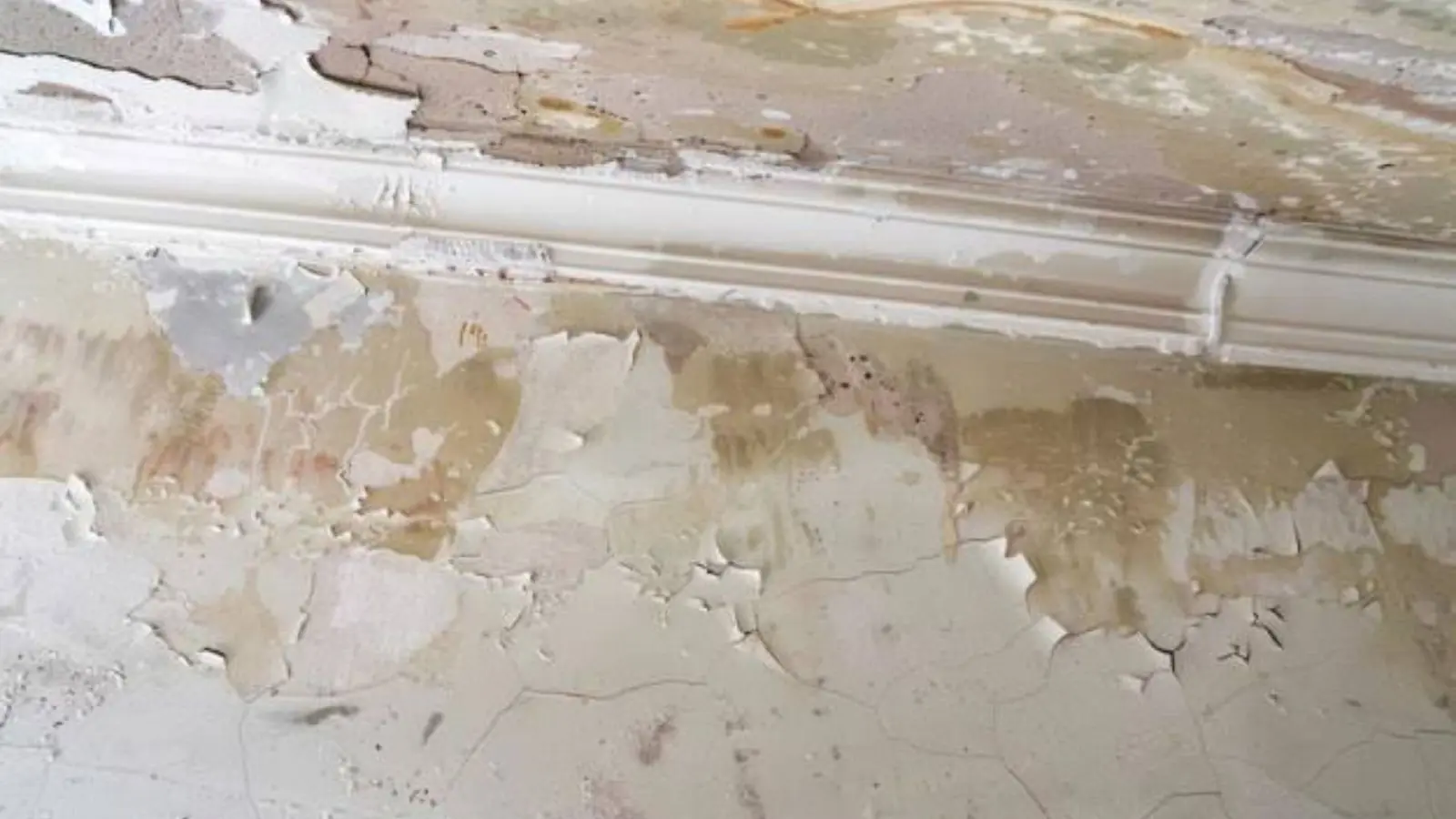
How high do crews cut a water-damaged wall?
Drywall acts like a wick. Water sits at the bottom of the wall, then climbs the paper face and the gypsum core, often higher than the stain you can see. The standard approach is to cut above the visible wicking line and then check with a moisture meter to find where the dry material begins.
For a clean-water leak that reached the floor, that cut is commonly 12 to 24 inches above the wet line, or a full 4-foot sheet height where seams make a partial cut awkward. Drywall sheets are 4 feet wide and often 8 feet tall, so crews often cut to the 2-foot or 4-foot mark. If the water category is worse, the cut goes higher or removes the whole wall.
Cut-out heights by situation
| Situation | Typical cut | Why |
|---|---|---|
| Small supply-line drip, dried quickly | Spot repair or no cut if readings are normal | Wicking stopped before the paper softened |
| Clean water on the floor, wall wet to a few inches | Cut 12 to 24 inches above the visible line | Reaches the dry edge of the wicking |
| Water ran down inside the wall from above | Open from the leak point down, often a full sheet | Water collects in the cavity and insulation |
| Gray water, such as a dishwasher or washing machine overflow | Cut higher, discard insulation and baseboards | Contaminated water leaves residue in porous material |
| Sewage or flood water, Category 3 | Remove wall material well above the line, often both sides | Porous material cannot be made safe once soaked |
Insulation is cut out wherever drywall comes off. Batt insulation holds water and loses its value once soaked, so it goes in a bag, not back in the wall. Baseboards often survive if they are solid wood and dry, but MDF baseboard swells and is usually replaced.
Wall wet or paint bubbling?
Call the 24/7 line. Same-day response is available when schedules allow, and scope and price are explained before work starts.
Why a wall that looks fine can still be wet
Paint and wallpaper hide the real extent. A wall may feel dry to the hand but show high readings at the base plate, behind cabinets, or inside the cavity beside a plumbing run. A thermal imaging camera helps find cool, wet zones, and a pin or pinless moisture meter confirms the numbers.
This is why small DIY patches fail. Cutting out only the stained circle leaves wet material behind it. The mold risk does not show up for days, and then the paint blisters again. If a stain has returned after you repainted it, moisture is still in that wall.
What you can do yourself and what to leave alone
Homeowners can shut off water, move furniture, pull back carpet edges, run a fan and photograph damage. Those steps buy time and limit the spread. Stay away from wet drywall near outlets, and never open a wall that may hold live wiring until the circuit is off and tested.
Leave demolition of larger areas, insulation removal and anything involving sewage to a crew. Gray or black water carries bacteria, and a ripped-out wall releases dust and fibers into your air. Wear gloves and a mask for small jobs, and bag debris before it leaves the room.
From wet wall to finished paint
Stop the source and protect the room
Fix or shut off the pipe, appliance line or exterior opening. Cover flooring and move furniture before any demolition.
Open the wall and dry the cavity
After drywall and insulation come out, air movers and LGR dehumidifiers dry the studs, plates and floor edge. Small wall cavities may also use directed airflow through drilled holes.
Confirm dry with readings
Do not close the wall on a guess. Record moisture readings on the framing and compare them to a dry reference wall in the same house.
Rebuild, tape, texture and paint
New drywall goes in, seams are taped and mudded, texture is matched, then the wall is primed and painted from corner to corner.
Moisture readings before closing the wall
Closing a wall on damp framing is the most expensive shortcut in the repair. Wood studs and the bottom plate need to read near the same level as an unaffected wall in the house, and the reading should be stable on consecutive days, not just once.
Ask the contractor for the numbers in writing. Reputable restoration work follows the ANSI/IICRC S500 standard for water damage restoration, and asking whether a crew works to it is a fair question. A good crew will show you the meter, the dry reference reading and the date of each check.
Paint and texture matching
Texture is where a patch gives itself away. California homes of every era have orange peel, knockdown, skip trowel or smooth finishes, and matching one takes the right spray, the right drying time and feathered edges. A small patch painted only in the repaired area often flashes, meaning it shows in raking light.
The most reliable fix is to paint the whole wall, corner to corner, with a primer that suits new drywall. Older paint also fades, so a patch painted with the original color can still look different. Budget the paint step as part of the repair, not an extra.
Mission Viejo notes: permits, districts and contractors
The city's Building Services division, at 200 Civic Center, takes permit applications and schedules inspections through its online self-service portal. The city's page does not say whether a wall repair needs a permit, so ask Building Services before you open walls that hold plumbing or wiring.
California's contractor board says unlicensed work is allowed only for very small jobs, only if no workers are hired and only if no building permit is needed. For a larger repair, check the license on the contract and look up the number on the state board's site.
The board also says a down payment is capped at 10 percent of the contract or a lower state cap, whichever is less, and that you have three days to cancel most home improvement contracts.
If the water came from the supply side, the city lists four water districts for residents: El Toro, Moulton Niguel, Santa Margarita and Trabuco Canyon. Your address decides which one to call about a main leak. Crews dispatched from Mission Viejo also repair walls in Rancho Santa Margarita and Lake Forest, where the same districts overlap.
Wall water damage questions
Do I need a permit for drywall repair in Mission Viejo?
The city's page does not say, so ask Building Services directly. Simple drywall patches often differ from work that touches plumbing, electrical or structure, and the city can tell you what applies to your address.
Can I just cut out the stain and patch it?
Only if readings show the surrounding drywall, studs and insulation are dry. Otherwise the patch traps moisture. A moisture meter and thermal imaging camera show how far the wet zone really goes.
How long does a wet wall take to dry?
Drying with air movers and LGR dehumidifiers often takes several days, depending on materials and how much water got in. Dry means readings match a reference wall, not that the paint feels dry.
My wall has bubbling paint. Is that mold?
Bubbling paint means water is behind the film. It may or may not involve mold. Dry the wall, fix the source and, if you see growth, ask a mold remediation crew to assess. Health questions belong to a physician.
Will insurance pay for wall repair?
Sudden and accidental water damage is often covered. Gradual leaks and neglect often are not. Check your policy, keep a log of calls and photos, and ask your insurer.
What does a full wall repair include?
Demolition, drying, new drywall, taping, texture, primer and paint. See water damage repair for the rebuild process, and scope and price are explained before work starts.