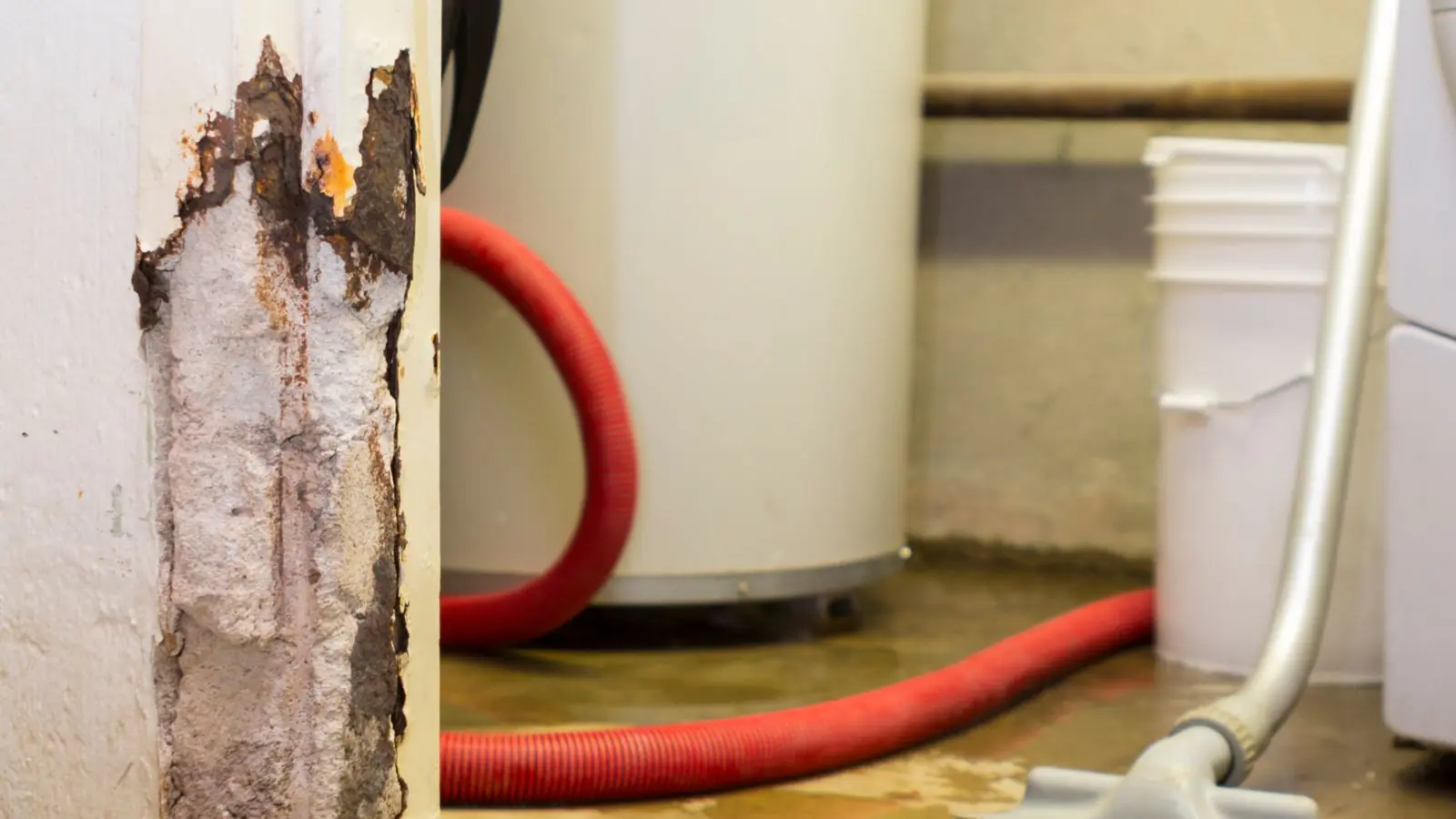
Two appliances, two kinds of leak
Washing machines fail at the connections. A rubber supply hose bulges, splits or pops off its fitting, and the shutoff valve behind the machine keeps feeding it with line pressure. Water heaters fail at the tank, the relief valve line or the connections on top. A tank that has corroded through can empty its whole contents onto the floor.
The fix starts the same way. Stop the water going in, protect yourself from electricity and gas, then get the standing water out before it crosses into hallways and the room next door. The details differ by appliance, which is why the two jobs are split below. Both appliances can fail while you are asleep or at work, so the first sign is often a soft spot in the floor or a stain on the next room's wall.
Washing machine: a failed hose or valve
Close the shutoff valves first
Two valves sit behind most washers, one for hot and one for cold. Turn them to closed. If a valve will not turn or is leaking at the stem, use the main water shutoff for the home. Pull the plug only if you can reach the outlet without standing in water.
Why the hose matters
Rubber hoses age quietly. A bulge near the fitting, rust at the coupling or a damp spot under the machine is a warning. Braided stainless hoses resist bursting but are not a lifetime part. Check the date stamped on the hose and replace on a schedule.
What spreads
Water runs under the machine, through the floor edge and into walls. Laundry rooms often sit beside bedrooms or closets, so carpet and baseboards go first. A washer dumping water in a hallway closet can wet three rooms.
Laundry room flooded?
Call the 24/7 line. Same-day response when available. Scope and price explained before work starts.
Water heater: tank, pan or connection
A drip at a fitting is different from a failed tank, and a pan tells you which one you have. The table lays out what you are likely to see and what to do about it.
| What you see | Likely source | What to do |
|---|---|---|
| Small puddle in the drain pan | Fitting, relief valve line or a slow drip | Close the cold supply valve at the heater and call a plumber |
| Water around the base, pan overflowing | Tank leak or failed connection | Close the cold supply, shut off power or gas if safe, call the 24/7 line |
| Hissing or rotten egg smell near a gas unit | Gas issue, not only water | Leave, avoid switches, call 911 or the gas utility |
| Wet drywall behind a closet heater | Slow leak into the wall | Photograph, shut off supply, call for moisture mapping |
| Water from a pipe running to the roof or outside | Relief valve discharging | Call a plumber, this may mean pressure or temperature trouble |
A pan under a water heater catches small leaks, but only if it drains to a safe place and is not full of dust. A tank failure usually overwhelms it. If the heater stands in an attic or closet, the water finds the ceiling below.
When the leak goes into the unit below
In a condo or townhome, the washer or heater may sit directly above a neighbor. Water can drop into their ceiling within minutes, and their wall cavities fill the same way yours do. Knock on the door of the unit below, tell the manager and call your own insurer promptly.
You may be responsible for damage in the other unit, and a drying crew in your own unit does not remove that exposure. Keep the failed hose, take photos and share moisture readings with your insurer. Read your association documents for notice rules. An emergency water removal crew can work in your unit while the question of fault is settled.
What dries and what is removed after an appliance leak
Clean supply water from a hose or heater is the friendliest kind to dry, but time still matters. The table shows how the common materials usually sort out, based on what a moisture meter reads.
| Material | Often dried in place | Often removed |
|---|---|---|
| Vinyl and tile floors | Subfloor under lifted edges, with air movers | Planks or sheet vinyl that swelled or lifted |
| Drywall around the appliance | Firm board that reads dry after a short time | Board that is soft, sagging or wet above the visible line |
| Cabinets and counters | Solid boxes checked with a meter | Particleboard bases that swelled, loose toe-kicks |
| Carpet in nearby rooms | Carpet itself, after extraction | Pad underneath, usually |
| Framing and subfloor | Studs and plywood, monitored daily | Rarely, only if damaged or long wet |
Wet board is cut at a line above the visible water mark so the rest can dry. Water wicks upward from the bottom edge of a wall, which is why the stain understates the wet area.
Stop the next one
- Replace rubber supply hoses with braided stainless ones and note the date
- Leave a few inches behind the washer so hoses are not kinked
- Look behind the machine twice a year for drips and rust at the couplings
- Install a drain pan with a drain line under a laundry-room water heater
- Know where the water heater cold supply valve is and test it
- Shut the washer valves when you go away for a long trip
How drying works after a laundry-room leak
Extraction units pull the standing water first. Then air movers push dry air across wet surfaces and LGR dehumidifiers take the moisture out of the room. Crews read moisture meters daily and thermal imaging cameras show wet areas hidden behind finished surfaces.
The work is described in our page on water damage repair, including when a wall stays and when it goes. If a smell appears days later, stop and ask the crew to recheck moisture.
Ask the crew for the daily readings and the final dry reading for each material. Those numbers tell you when the equipment can leave, and they help your insurer follow the work. If the heater or washer was in an interior closet, ask that the door and shelving be opened so air can circulate around the cavity.
Mission Viejo notes: older homes, permits and who to ask
Housing data compiled for the city shows that about two-thirds of Mission Viejo homes were built between 1970 and 1989. Some appliances and hoses have been replaced since, but not every one, and the shutoff valves behind a washer can be older than the machine. Test them. A valve that has not moved in years may stick or leak when you finally turn it.
If you are replacing a water heater, ask the city's Building Services division whether a permit is needed. The city page does not say, and Building Services handles permit questions. Permits and inspections are submitted through its online portal.
The same housing data shows Mission Viejo is about 17 percent multifamily, which is why the unit-below scenario is real. Neighbors in Laguna Hills and Lake Forest will see the same pattern wherever condos and townhomes sit above one another.
Washer and water heater leak questions
Who do I ask in Mission Viejo whether a water heater replacement needs a permit?
Ask the city's Building Services division. The city page does not state the rule, so call before the work begins. Permits and inspections run through the online portal.
My washer hose burst. Is that covered by insurance?
Sudden and accidental water damage is often covered, though terms vary. The failed hose may not be covered, but the water damage may be. Read your policy and ask your insurer.
Can a water heater leak make me sick?
Health questions belong to a physician. If the water sat for days or you see growth, ask for a moisture check and keep the area dry.
What if the water heater is gas and I smell gas?
Leave the home, avoid switches and call 911 or your gas utility first. Then call the restoration line from outside.
Will drying equipment run for days?
Often yes. Air movers and dehumidifiers run until readings reach a dry standard, which depends on the material and the extent of the wetting.