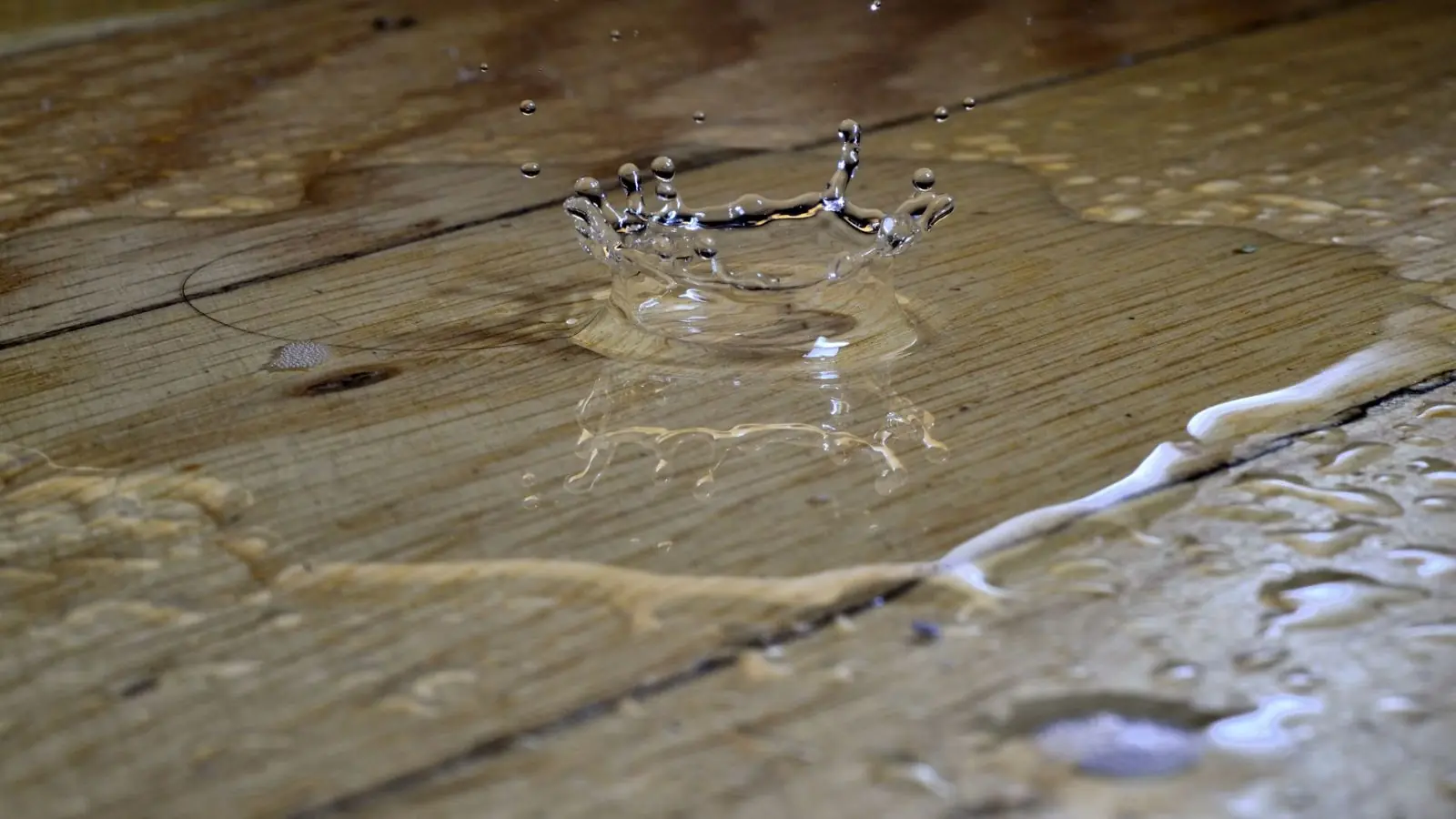
The rule that saves floors: dry first, sand last
Wood takes on water at the bottom and edges, swells, and then pushes against its neighbors. Many floors recover if the water is removed quickly and the wood is allowed to dry slowly and fully. Sanding too soon cuts off the high edges while the wood is still wet, and when the boards finish drying the floor can end up crowned or gapped.
So the sequence matters more than any single product. Stop the water, remove standing water, start controlled drying, wait for stable moisture readings, then flatten and refinish. Skip a step and you may pay for the floor twice.
Cupping, crowning and buckling: what each one means
Cupping
The edges of each board rise higher than the center. It usually means moisture came from below or the underside is wetter than the top. Cupping often eases as the boards dry, but not always completely.
Crowning
The center of each board rises higher than the edges. It can happen when a cupped floor is sanded before it dries, or when the top surface is wetter than the bottom after a spill. Crowning is why a patient drying schedule matters.
Buckling
Boards lift off the subfloor, sometimes by an inch or more. This is the severe end of water damage and often means the flooring has to come up. A buckled floor needs a professional look right away.
Staining is a separate signal. Gray or black marks between boards, or a sour smell, point to water sitting under the floor for a long time. Dark stains can be mold or finish damage, and a moisture meter reading tells you which.
Hardwood wet right now?
Call the 24/7 line. Scope and price are explained before work starts, and same-day response is available when schedules allow.
What to do before anyone arrives
- Stop the source: close the fixture valve or the main water valve.
- Soak up standing water with towels or a wet vacuum, and do not walk on the wet floor in shoes.
- Lift rugs, mats, planters and furniture legs, and slide foil or plastic under any legs you cannot move.
- Turn on the air conditioning or a ceiling fan to keep air moving, but do not use heat to speed things up. Fast heat dries the surface and splits boards.
- Do not seal the floor with plastic or wax, which traps moisture, and do not start sanding.
- Photograph the floor, the source and the ceiling below if it is a second story, then call.
What drying actually looks like, step by step
Extract and open
Water is removed with an extraction unit or wet vacuum. Rugs, mats and furniture come off. In some cases a few boards or baseboards are removed to open the edges.
Dry with air movers and dehumidifiers
Air movers push air across the floor, and LGR dehumidifiers pull moisture out of the room. Specialty floor-drying systems can draw moisture from under the boards.
Measure daily
A moisture meter tracks the boards, the subfloor and a dry reference sample. Readings on consecutive days show whether drying is finished.
Wait, then reassess
Wood changes shape slowly. Many floors need several days to weeks to settle, and some cupping flattens only after readings stabilize.
How long drying takes, and why it is not a quick fix
Surface water dries in hours, but the wood itself is slower. A floor that took on a lot of water can need days of active drying and then more time to settle before anyone decides about sanding. Thick solid planks hold moisture longer than thin engineered boards, and a slab or subfloor underneath adds more.
Do not trust touch. A floor can feel dry while the boards still carry high moisture. Insist on written readings. If a company wants to sand within a day or two of a major leak, ask what the moisture readings are first.
Sanding and refinishing, when it is time
| Board condition | Likely path | Notes |
|---|---|---|
| Light cupping, readings back to normal | Wait for flattening, then screen or sand and refinish | Do not sand until the floor is dry and flat or stable |
| Moderate cupping or gapping | Sand after stable readings and enough settle time | May need board replacement in the worst spots |
| Crowning | Re-measure moisture, then sand flat once dry | Premature sanding is a common cause |
| Buckled or detached boards | Replace affected boards, dry subfloor | Often needs repair under the flooring |
| Black staining or mold | Remove affected boards, treat per mold standard | Fix moisture first |
Sanding removes a layer of wood, so a floor can only be refinished a limited number of times. Engineered flooring has a thinner wear layer than solid wood, and it may not survive a deep sanding.
When boards are replaced rather than saved
Boards come out when they have buckled, split, delaminated or stayed stained after drying. Replacing a few boards is possible if matching stock is available, and installers blend them into the floor with sanding and finish. Continuous floors across open rooms often need the finish carried across the whole area so repairs do not show.
If the subfloor is wet or swollen, the boards above have to come up too. Water under wood can sit for weeks, and putting boards back over damp plywood invites repeat cupping. Ask for the subfloor reading before reinstalling.
Mission Viejo notes: hardwood, weather and claims
The nearest NOAA climate normal, from the Laguna Beach station, shows rain clustering from November through March with very little in summer. Winter storms can push water through door thresholds and window frames onto wood floors, while summer cupping often points to plumbing or an appliance line. Check the season against the cause.
According to Census data, about 77 percent of Mission Viejo homes are owner-occupied. Owners with hardwood should photograph the floor in a dry state before any trouble. The California Department of Insurance says a policy may not cover further damage if you did not take reasonable steps to protect the property, so start drying quickly and keep a log of calls and emails.
Hardwood repairs sometimes involve subfloor or plumbing work, so ask the city's Building Services division whether a permit applies. Crews dispatched from Mission Viejo also handle floors in Laguna Hills and Laguna Niguel, where homeowners face the same drying decisions.
Hardwood floor water damage questions
Do hardwood floors cup more in Mission Viejo in winter or summer?
Cupping from leaks can happen any season. Winter rain can wet floors near doors and windows, based on the nearest NOAA normal showing rain from November through March. A summer cupped floor usually points to a dishwasher, fridge line, water heater or slab moisture.
Will cupped hardwood flatten on its own?
Often it improves as the floor dries, but it can take weeks, and some floors stay slightly cupped. Do not sand until moisture readings are stable and the floor has had time to settle.
How soon should I call after a hardwood floor gets wet?
Call as soon as you can. Fast extraction and drying give the floor its best chance. Our 24/7 line handles after-hours leaks, and same-day response is available when schedules allow.
Can I rent air movers and fix it myself?
We do not offer equipment rentals. Drying equipment works only when it is placed and monitored with a meter, so most floors are better served by a crew that tracks readings.
Is mold a risk under wet hardwood?
Yes, if the boards and subfloor stay damp. Dry the floor, fix the water source and watch for dark spots or a musty smell. A mold remediation crew can assess. Health questions belong to a physician.
Does insurance cover water damaged hardwood?
Sudden and accidental water damage is often covered. Gradual leaks and neglect often are not, and flood is usually excluded from standard policies. Read your policy and ask your insurer. See water damage repair for the rebuild.